

Many people use the words narcissist and sociopath as if they mean the same thing. Social media often makes this confusion even worse. This article explores Narcissist vs Sociopath from a psychological and clinical perspective.
As a result, someone who appears selfish or manipulative is quickly labeled with one of these terms without understanding what they actually mean.
However, psychology tells a much more complex story.Although narcissists and sociopaths may share some behaviors, they are not the same.
Their motivations, emotional experiences, relationships, and patterns of behavior differ in important ways. Understanding these differences can help you recognize unhealthy relationships, make informed decisions, and avoid common misconceptions.
This article explores Narcissist vs Sociopath from a psychological and clinical perspective. Rather than relying on internet myths, it draws upon established psychological research and clinical understanding.
You will also learn why proper diagnosis matters and why labels should never replace professional evaluation.
Whether you are trying to understand someone in your life or simply want to learn more about personality disorders, this guide will provide an in depth explanation that is both practical and evidence based.
Why Understanding Narcissist vs Sociopath Matters
The discussion around Narcissist vs Sociopath is more than an academic debate. It affects relationships, workplaces, families, and even legal situations.
For example, imagine two managers who both manipulate their employees.The first manager constantly demands praise.
He becomes angry whenever someone questions his authority. He believes he deserves special treatment and often exaggerates his achievements.
His behavior centers on protecting an inflated sense of self importance.The second manager lies effortlessly, breaks company policies without guilt, and enjoys exploiting employees for personal gain.
He does not seem concerned about the emotional or financial harm he causes. Instead, he views people as tools that help him achieve his goals.
At first glance, both managers appear manipulative.However, their underlying psychology is very different.This distinction matters because each personality pattern requires a different clinical understanding, different management strategies, and different expectations regarding treatment outcomes.
Understanding these differences can also reduce unnecessary fear. Not every difficult person is a narcissist, and not every manipulative individual is a sociopath.
What Is a Narcissist?
In everyday conversation, people often call someone a narcissist simply because they enjoy attention or appear confident.
Clinical psychology defines the condition much more carefully.A narcissist is generally someone who shows a persistent pattern of grandiosity, an excessive need for admiration, and significant difficulty empathizing with other people.
These characteristics become especially concerning when they interfere with relationships, work, or daily functioning.
According to the Diagnostic and Statistical Manual of Mental Disorders, Fifth Edition, Text Revision, commonly known as the DSM 5 TR, these patterns may be consistent with Narcissistic Personality Disorder when they meet specific diagnostic criteria.
A diagnosis should always be made by a qualified mental health professional after a comprehensive assessment.People with narcissistic traits often experience an internal contradiction.On the outside, they may appear confident, successful, or even charismatic.On the inside, many struggle with fragile self esteem that depends heavily on external validation.
Consequently, criticism can feel deeply threatening, even when it is minor or constructive.Because of this emotional vulnerability, they may react with anger, blame, defensiveness, or attempts to regain control.
Common Characteristics of Narcissistic Personality
Although every individual is different, many people with clinically significant narcissistic traits display several recurring patterns.
They crave admiration
Recognition often becomes an emotional necessity rather than a pleasant experience.Consequently, compliments may temporarily boost their mood, while criticism can trigger intense emotional reactions.
They have an exaggerated sense of importance
Many believe they deserve special treatment because they see themselves as unusually talented, intelligent, or exceptional.Therefore, they may expect privileges that other people do not receive.
Their empathy is often limited
Many individuals with narcissistic personality traits understand what others are feeling on an intellectual level.However, they often struggle to genuinely prioritize another person’s emotional needs when those needs conflict with their own goals.
Relationships often become transactional
Instead of mutual support, relationships may revolve around admiration, status, or personal benefit.As a result, friendships and romantic relationships frequently become unstable over time.
What Is a Sociopath?
Interestingly, sociopath is not an official diagnosis listed in the DSM 5 TR.Instead, mental health professionals typically diagnose Antisocial Personality Disorder when someone demonstrates a long standing pattern of violating the rights of others, disregarding social norms, and failing to experience appropriate remorse.
The word sociopath remains widely used in books, media, and public discussions because it provides a familiar way to describe individuals who consistently engage in serious antisocial behavior.
Unlike narcissism, which often revolves around protecting self esteem and maintaining admiration, antisocial personality patterns focus more heavily on exploitation, rule breaking, deception, aggression, and personal gain.
This distinction represents one of the most important differences in the debate about Narcissist vs Sociopath.
A Historical Perspective from Otto Kernberg

One of the most influential psychoanalysts to study narcissistic personality is Otto Kernberg. His work transformed the understanding of severe narcissism by emphasizing that grandiosity often hides profound psychological insecurity rather than genuine confidence.
Kernberg proposed that many individuals with pathological narcissism rely on an idealized self image to protect themselves from deep feelings of shame, inadequacy, and emotional vulnerability.
His research also highlighted that narcissism exists on a spectrum. Consequently, not everyone with narcissistic traits meets the criteria for a personality disorder.
This distinction remains highly important because personality traits alone do not equal a clinical diagnosis.
Modern psychologists continue to build upon Kernberg’s work while integrating findings from neuroscience, developmental psychology, and personality research.
Why Accurate Diagnosis Is Essential
Many online videos encourage viewers to diagnose family members, partners, or coworkers.
Although these videos may feel convincing, they can oversimplify complex mental health conditions.
Personality disorders require careful evaluation that considers developmental history, long term behavioral patterns, cultural influences, medical conditions, and other psychiatric disorders.
For example, trauma related disorders, bipolar disorder during certain mood episodes, substance use disorders, and some neurological conditions can sometimes produce behaviors that resemble narcissistic or antisocial traits.
Therefore, a qualified psychologist or psychiatrist evaluates the complete clinical picture instead of relying on isolated behaviors.
Understanding Narcissist vs Sociopath begins with recognizing this important principle. Labels should educate, not stigmatize.
Narcissist vs Sociopath and Empathy
One of the biggest differences in “Narcissist vs Sociopath” involves empathy.Many people believe narcissists have no empathy at all.
However, psychological research paints a more nuanced picture.Some people with narcissistic traits can recognize another person’s emotions.
They may understand that someone feels hurt, embarrassed, or frightened. Nevertheless, their own need for admiration often takes priority.
As a result, they may ignore another person’s emotional needs when those needs threaten their self image.
A sociopath often shows a different pattern.Instead of struggling because of insecurity, a sociopath may simply place very little value on another person’s well being.
Consequently, harming someone emotionally, financially, or physically may not create the guilt that most people experience.
This distinction explains why two people can commit similar actions while having very different psychological motivations.
Emotional World of a Narcissist
Many people imagine narcissists as endlessly confident.
Interestingly, many psychologists believe the opposite may be true beneath the surface.
Research suggests that pathological narcissism often hides intense feelings of inadequacy. Therefore, admiration becomes a psychological shield rather than a luxury.
Imagine a beautifully painted house with serious structural damage hidden inside.From the street, everything appears perfect.
However, even a small storm can expose major weaknesses.Likewise, a narcissist may appear successful, confident, and socially skilled. Yet even mild criticism can trigger intense anger because it threatens the carefully protected self image.
This pattern helps explain behaviors such as excessive bragging, constant comparison with others, jealousy, and difficulty accepting responsibility.
Emotional World of a Sociopath
The emotional experience of a sociopath often looks very different.Instead of constantly protecting self esteem, many individuals with antisocial personality traits focus on obtaining immediate rewards.
These rewards may include money, power, excitement, revenge, or dominance.
Consequently, rules become obstacles rather than moral guidelines.Some sociopaths remain calm even in situations that make most people anxious.
Researchers continue studying why this happens. Some findings suggest differences in emotional processing, fear responses, and impulse control.
However, these biological factors do not excuse harmful behavior. Rather, they help clinicians understand how personality develops through a combination of genetics, environment, childhood experiences, and brain development.
Narcissist vs Sociopath in Relationships
Relationships reveal another important difference in Narcissist vs Sociopath.
A narcissist usually wants admiration, loyalty, and constant validation.At first, the relationship may feel exciting.
The narcissist may appear attentive, affectionate, and deeply interested.Over time, however, the relationship often becomes one sided.
The partner may feel responsible for protecting the narcissist’s emotions while receiving little emotional support in return.
In contrast, a sociopath often views relationships more strategically.
Instead of seeking admiration, they may seek opportunities.
For example, they may choose relationships that provide financial gain, social status, housing, business advantages, or legal protection.
If the relationship no longer serves a purpose, they may leave with little emotional conflict.Of course, not every individual follows this pattern exactly.
Personality disorders exist on a spectrum, and personal history always influences behavior.
A Real Life Style Example
Consider two neighbors who both borrow money from a friend.
The first neighbor spends weeks explaining why he deserves another chance.
He becomes offended when questioned and insists everyone should trust him because he is a good person.
When confronted, he blames others instead of accepting responsibility.The second neighbor simply lies about where the money went.
He invents convincing stories, shows little concern for the friend’s financial loss, and begins searching for another person to exploit.
Both behaviors damage trust.However, the motivations differ.The first neighbor protects his self image.The second neighbor focuses on personal gain.
This simple example illustrates why understanding “Narcissist vs Sociopath” requires looking beyond outward behavior.
Can Someone Be Both?
This question often appears in clinical discussions.The answer is yes, although it is relatively uncommon.
Mental health professionals recognize that personality disorders can overlap. Consequently, one person may show significant narcissistic traits alongside antisocial traits.
For example, someone may crave admiration while also displaying chronic deception, aggression, and disregard for the rights of others.When this happens, assessment becomes more complex.
Psychologists evaluate long term behavioral patterns rather than isolated incidents. They also consider childhood history, family environment, trauma, substance use, medical conditions, and other psychiatric disorders before reaching a diagnosis.
Because of this complexity, online personality quizzes should never replace a professional mental health evaluation.
What Research Says
Current psychological research suggests that both narcissistic and antisocial personality disorders develop through multiple interacting factors.
These include genetic influences, childhood experiences, temperament, family dynamics, and environmental stressors.Importantly, researchers do not believe there is one single cause.Instead, personality develops gradually over many years.
This understanding encourages a balanced perspective.Rather than viewing people as simply evil or good, psychology attempts to understand how biological, psychological, and social factors interact to shape behavior.Even so, understanding someone’s condition does not mean accepting abusive behavior.
Healthy boundaries remain essential regardless of the reason behind harmful actions.
Clinical Perspective on Narcissist vs Sociopath
After learning the behavioral differences, many people ask a more important question.Can these conditions actually be diagnosed and treated?
The answer is yes, but the process is far more complex than many online articles suggest.A qualified psychologist or psychiatrist does not diagnose someone after one conversation or based on a few social media videos.
Instead, clinicians gather detailed information about a person’s history, relationships, emotional patterns, work life, childhood experiences, and current functioning.
They also rule out medical conditions, substance use, and other mental health disorders that could produce similar behaviors.
Therefore, understanding Narcissist vs Sociopath requires looking beyond labels and focusing on comprehensive clinical evaluation.
How Mental Health Professionals Diagnose Narcissistic Personality Disorder
Mental health professionals use the Diagnostic and Statistical Manual of Mental Disorders, Fifth Edition, Text Revision (DSM 5 TR) as one of the primary references for diagnosis.
A diagnosis of “Narcissistic Personality Disorder” is not based on confidence or occasional selfish behavior. Instead, it involves a long standing pattern of grandiosity, a strong need for admiration, and significant impairment in relationships or daily functioning.
Clinicians look for patterns that remain stable over time rather than reactions to temporary stress.
For example, a person may consistently believe they deserve special treatment, exaggerate achievements, struggle to tolerate criticism, and have difficulty recognizing the emotional needs of others.
Importantly, these traits usually appear across multiple areas of life, including work, family, friendships, and romantic relationships.
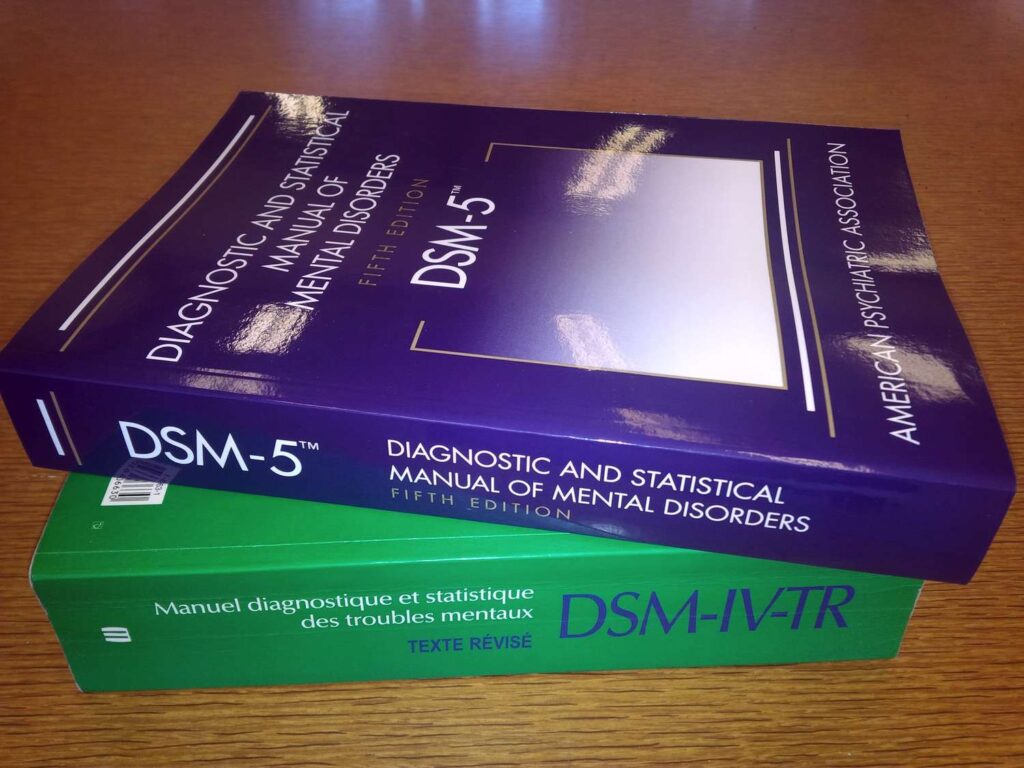
How Antisocial Personality Disorder Is Diagnosed
When discussing “Narcissist vs Sociopath“, it is important to remember that sociopath is not an official diagnostic term.Instead, clinicians diagnose Antisocial Personality Disorder when specific diagnostic criteria are met.
These criteria generally include a persistent pattern of violating the rights of others, repeated deception, impulsive behavior, irresponsibility, aggression, disregard for safety, and a lack of genuine remorse.
Another important requirement is developmental history.According to current diagnostic guidelines, there must usually be evidence of significant conduct related problems before adulthood.
Therefore, clinicians carefully explore childhood and adolescent behavior instead of focusing only on adult actions.This developmental perspective helps improve diagnostic accuracy.
Brain Science Behind Narcissist vs Sociopath
Neuroscience has expanded our understanding of personality disorders during the past two decades.
Although researchers continue studying the brain, several findings have become increasingly important.Studies suggest that some individuals with narcissistic traits may show differences in brain regions involved in empathy, emotional regulation, and self processing.
These findings may help explain why criticism often feels emotionally overwhelming.Research involving antisocial personality disorder has also identified differences in areas associated with emotional learning, fear processing, decision making, and impulse control.However, these findings should be interpreted carefully.
Brain scans cannot diagnose a personality disorder.Instead, they help researchers understand possible biological influences that interact with life experiences, family environment, genetics, and childhood development.
Consequently, personality disorders should never be explained by biology alone.
Can Medication Treat Narcissist vs Sociopath?
One of the most common questions about Narcissist vs Sociopath concerns medication.The answer may surprise many readers.
Currently, there is no medication specifically approved to cure Narcissistic Personality Disorder or Antisocial Personality Disorder.
Instead, psychiatrists prescribe medication when another condition occurs alongside the personality disorder.
For example, some individuals may also experience:
Major depression
Anxiety disorders
Panic disorder
Bipolar disorder
Attention deficit hyperactivity disorder
Sleep disturbances
Substance use disorders
In these situations, treatment focuses on the coexisting condition rather than the personality disorder itself.
Depending on the individual’s needs, a psychiatrist may prescribe antidepressants, mood stabilizers, or other evidence based medications for those specific conditions.
Medication decisions should always be made by a licensed medical professional after a complete evaluation.
Self medication or stopping prescribed medication without medical supervision can be dangerous.
Can Therapy Help?
Many people believe personality disorders cannot improve.
Current psychological research offers a more balanced picture.Although personality patterns are deeply established, meaningful improvement is possible for some individuals who genuinely commit to long term treatment.
The greatest challenge is motivation.A person who does not recognize a problem rarely seeks meaningful change.However, when motivation exists, psychotherapy may help improve emotional regulation, interpersonal functioning, and self awareness.
Several evidence based approaches have shown promise depending on the individual’s needs.
These include Cognitive Behavioral Therapy, Schema Therapy, Mentalization Based Therapy, and certain psychodynamic approaches.
Treatment usually focuses on improving emotional insight, increasing responsibility, reducing harmful behaviors, and developing healthier relationship patterns.Progress often takes years rather than weeks.
Therefore, realistic expectations remain essential.
Why Childhood Experiences Matter
Researchers increasingly recognize that early childhood experiences influence personality development.
This does not mean that every difficult childhood produces a personality disorder.
Likewise, not every person with a personality disorder experienced severe trauma.Instead, scientists believe personality develops through an interaction between biological predisposition and environmental influences.
Some contributing factors that researchers continue investigating include inconsistent parenting, neglect, abuse, unstable attachment, early behavioral difficulties, and genetic vulnerability.
Because every person’s developmental history is unique, clinicians avoid making assumptions based on one factor alone.
Common Myths About Narcissist vs Sociopath
Many myths continue spreading online.
Understanding the facts can help reduce stigma while encouraging more informed discussions.
Myth 1:
Every narcissist is a sociopath.
This is false.Although some traits may overlap, these conditions represent different clinical concepts with different motivations and behavioral patterns.
Myth 2:
Every sociopath is violent
This is also inaccurate.Some individuals with Antisocial Personality Disorder engage in serious criminal behavior, while others may function in society without committing violent crimes. Harmful behavior can still occur without physical violence.
Myth 3:
Personality disorders never improve
Research suggests improvement is possible for some individuals, especially when they actively participate in long term psychological treatment and remain motivated to change.
Myth 4:
You can diagnose someone from social media
Short videos, personality quizzes, and online checklists cannot replace a comprehensive psychological assessment.Only trained mental health professionals can make a formal diagnosis.
Practical Advice if You Recognize These Behaviors
Whether someone shows narcissistic traits or antisocial traits, your first priority should be your own well being.
Healthy boundaries remain one of the most effective forms of protection.Pay attention to repeated patterns instead of isolated incidents.
Notice whether apologies are followed by meaningful behavioral change.Trust consistent actions more than persuasive words.
If a relationship becomes emotionally abusive, controlling, or physically unsafe, seeking support from trusted friends, family members, or qualified mental health professionals can be an important step.
Understanding Narcissist vs Sociopath should empower you to make healthier decisions rather than encourage fear or quick judgments.
Related Articles
What Is Real Depression? How Clinical Depression Is Different?
Gaslighting in Relationships: How Manipulation Works?
How Narcissists Are Made: The Psychology Behind It
What is Narcissism? Meaning, Traits, and Psychology
Malignant Narcissist: Signs, Traits, and Toxic Behaviors
Covert Narcissism: Signs, Traits, and Hidden Behaviors
FAQs
Not necessarily. Narcissistic personality disorder (NPD) and antisocial personality disorder (ASPD) are different conditions, although some people can have traits or diagnoses associated with both. A person with narcissistic traits does not automatically develop antisocial traits over time. Personality disorders are influenced by a combination of temperament, development, experiences, and environment.
Neither is inherently more dangerous. Having NPD or antisocial traits does not automatically mean someone will be violent or dangerous. Risk depends on the individual and factors such as aggression, impulsivity, substance use, history of violence, and other circumstances. It is more useful to focus on specific harmful behaviors than on diagnostic labels.
Yes. A person with narcissistic personality disorder can experience love, attachment, affection, and emotional connection. However, narcissistic traits can make relationships difficult because of problems such as a strong need for admiration, sensitivity to criticism, entitlement, or difficulty recognizing a partner’s needs. Having NPD does not mean someone is incapable of caring about others
Some people with strong antisocial traits may experience reduced guilt, remorse, or empathy, particularly after harming others. However, this varies considerably between individuals. “Sociopath” is a non-clinical term, and people with antisocial personality disorder are not all completely incapable of experiencing guilt or other emotions.
No. Manipulation is a behavior, not a diagnosis. People may manipulate others for many different reasons, including insecurity, fear, learned behavior, personal gain, poor communication skills, or other psychological difficulties. While manipulation can occur in NPD, it is not enough by itself to determine that someone is a narcissist.
Personality disorders cannot always be completely prevented, and there is no single method that guarantees prevention. However, early support can potentially reduce risk and improve long-term outcomes. Healthy relationships, emotional regulation skills, stable environments, appropriate treatment of childhood difficulties, and early psychological intervention may all be helpful. Even when a personality disorder develops, treatment can help people manage symptoms and improve relationships and functioning.
References
- American Psychiatric Association.Diagnostic and Statistical Manual of Mental Disorders, Fifth Edition, Text Revision (DSM 5 TR).
- Otto Kernberg.Borderline Conditions and Pathological Narcissism.
- Theodore Millon.Disorders of Personality.
- American Psychological Association publications on personality disorders and psychotherapy.
- National Institute of Mental Health educational resources on personality disorders and mental health.
Reviewed by Ainna Ross
This article is grounded in published psychological research and my own experience recovering from narcissistic abuse. Read more about my background. It's for educational purposes only and isn't a substitute for professional diagnosis or care.
