

“Why you overthink everything” is one of the most common questions psychologists hear today. Although overthinking may feel like careful planning, it often becomes a cycle that creates more stress than solutions. Instead of helping you make better decisions, it keeps your mind trapped in endless possibilities.
Modern life encourages constant analysis. We compare ourselves on social media, receive information around the clock, and face countless daily decisions. As a result, many people mistake excessive thinking for responsibility or intelligence.
In reality, “why you overthink everything” has much more to do with how your brain protects you than with how intelligent you are.
As someone who has spent years studying psychological literature and translating complex research into practical insights, I have noticed a pattern. Most people who struggle with chronic overthinking are not weak or indecisive.
Instead, they are often highly conscientious individuals whose brains have learned to treat uncertainty as danger.This article explores “why you overthink everything”from psychological, neurological, and clinical perspectives.
You will learn what happens inside the brain, how childhood experiences can shape this habit, when overthinking becomes a mental health concern, and what evidence based treatments actually work.
Rather than offering quick tips, this guide explains the deeper mechanisms behind one of the mind’s most exhausting patterns.
What Does Overthinking Really Mean?
Before understanding “why you overthink everything”, it is important to define what psychologists mean by overthinking.
Overthinking is not simply thinking deeply. Deep thinking helps solve problems, generate ideas, and make thoughtful decisions.
Overthinking, however, keeps your mind moving in circles without reaching a meaningful conclusion.Psychologists often describe two common forms of overthinking.
The first is rumination.
This involves repeatedly focusing on past events, mistakes, or painful memories. A person might spend days wondering what they should have said during an argument or blaming themselves for an old decision.
The second is worry.
Unlike rumination, worry focuses on the future. Your mind imagines possible threats, even when little evidence suggests they will happen.
Although these patterns seem different, both activate similar emotional systems in the brain. Instead of reducing uncertainty, they often increase it.
For example, imagine a university student who sends an important scholarship application. After clicking submit, she begins wondering whether she attached the correct documents. She checks her email repeatedly, rereads the application from memory, and imagines receiving a rejection.
Days later, she is still mentally reviewing every detail despite having no new information.
Her thinking feels productive because she believes she is preventing failure. However, nothing she does after submitting the application can change the outcome.
Her brain mistakes repetitive thinking for problem solving.This illustrates an important psychological principle.
The human brain evolved to detect danger, not happiness. Thousands of years ago, constantly scanning for threats increased survival.
Today, however, the same survival system can become overactive, especially when the threats are emotional rather than physical.
Consequently, “why you overthink everything” often has less to do with the present situation and more to do with an ancient survival mechanism operating in a modern world.
Why Your Brain Chooses Overthinking
Many people believe they overthink because they care too much. While caring plays a role, neuroscience suggests a deeper explanation.
Your brain constantly predicts what might happen next. This process helps you cross busy streets, recognize faces, and prepare for everyday challenges.
Most of the time, these predictions happen automatically.However, when the brain detects uncertainty, it searches for additional information.
If it cannot find enough certainty, it continues searching.This creates a mental loop.Each unanswered question produces another possibility.
Each possibility generates another question.Eventually, your thoughts begin feeding themselves.Rather than finding clarity, your brain becomes trapped in uncertainty.
From an evolutionary perspective, this makes sense. Missing a genuine threat could once have been fatal.
Therefore, the brain developed a strong bias toward noticing possible danger instead of assuming everything would be fine.
Unfortunately, the same protective system now reacts to situations such as job interviews, relationships, career choices, financial decisions, and even text messages that receive delayed replies.
Therefore, when you ask yourself “why you overthink everything”, remember that your brain is usually attempting to protect you. The problem is not the intention. The problem is that the protective system continues working long after it has stopped being helpful.
Another important concept is the illusion of control .Research in cognitive psychology suggests that people often believe thinking longer will produce better outcomes.
In reality, many everyday decisions reach a point where additional thinking adds almost no value.
Imagine choosing between two equally qualified job offers. After gathering the necessary facts, spending another ten hours analyzing every possibility rarely improves the final decision.
Instead, it often increases anxiety because your mind keeps generating new hypothetical scenarios.
As a result, excessive analysis creates the false impression of productivity while delaying meaningful action.This explains why many people feel mentally exhausted despite accomplishing very little.
Their cognitive energy is spent managing imagined futures instead of engaging with the present.
Daniel Kahneman’s Research Explains Why You Overthink Everything

One of the most influential psychologists to explain “why you overthink everything”was Nobel Prize winner
Daniel Kahneman“.
Through decades of research in cognitive psychology and behavioral economics, Kahneman showed that the human brain does not always think rationally.
Instead, it relies on two different thinking systems that constantly interact.
In his groundbreaking book Thinking, Fast and Slow, Kahneman described these systems as
System 1and System 2.
System 1 works quickly. It makes automatic judgments, recognizes familiar patterns, and allows you to react without much conscious effort.
For example, when you instantly recognize a friend’s face or step out of the way of an approaching bicycle, System 1 is doing the work.
System 2, on the other hand, is slower and more deliberate. It helps you solve complex problems, compare options, and evaluate consequences.
This system is essential for thoughtful decision making. However, it also consumes much more mental energy.
The problem begins when System 2 remains active long after it has finished its job.
Instead of reaching a conclusion, it starts searching for perfect certainty. Every answer produces another question.
Every possibility leads to another scenario. Eventually, the brain mistakes endless analysis for careful thinking.
This is one of the strongest scientific explanations for “why you overthink everything”.
The Brain Prefers Certainty More Than Accuracy
One surprising discovery from cognitive psychology is that the brain values certainty almost as much as it values safety.
Whenever uncertainty appears, your nervous system becomes more alert. Although uncertainty is not dangerous by itself, the brain often interprets it as a possible threat.
Imagine sending an important message to someone you care about.An hour passes without a reply.Instead of assuming they are simply busy, your mind begins creating stories.
“What if I upset them?””Did I say something wrong?””What if they no longer want to talk to me?”None of these thoughts are supported by evidence.
Nevertheless, the brain continues searching because uncertainty feels uncomfortable.Ironically, the search itself increases anxiety.
Therefore, people who constantly ask “why you overthink everything” are often experiencing an intolerance of uncertainty rather than a lack of intelligence.
The Neuroscience Behind Overthinking
Modern brain imaging studies have given researchers a clearer understanding of what happens inside the brain during repetitive thinking.
One important brain region involved is the amygdala.
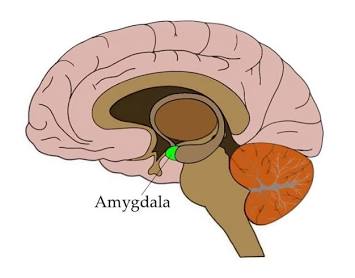
The amygdala acts as an emotional alarm system. Its primary role is to detect potential threats and prepare the body for action.
When the amygdala senses danger, it communicates with other parts of the brain to increase alertness. Your heart rate may rise, your muscles become tense, and your attention narrows toward possible problems.
Normally, the prefrontal cortex helps regulate these emotional reactions.
The prefrontal cortex is responsible for logical reasoning, planning, emotional regulation, and decision making. Ideally, it evaluates whether the perceived threat is real.
However, chronic stress changes this balance.
When stress hormones remain elevated for long periods, the amygdala becomes more reactive while the prefrontal cortex becomes less efficient at calming emotional responses.
As a result, small uncertainties begin feeling much larger than they actually are.
This explains why some people cannot stop thinking about minor mistakes that others forget within minutes.
Chronic Stress Trains the Brain to Expect Problems
The brain constantly learns from experience.
If you spend months or years living under significant stress, your brain gradually adapts by becoming highly sensitive to possible danger.
Psychologists call this hypervigilance.
Hypervigilance is common among people who have experienced prolonged emotional stress, unstable relationships, bullying, workplace pressure, or traumatic life events.
Over time, the brain begins scanning for threats automatically, even in relatively safe situations.
Consider a manager who was harshly criticized by a previous employer.
Years later, during a routine meeting at a new workplace, her supervisor simply says, “Can we talk later?”
Although nothing suggests a problem, her mind immediately assumes she has made a serious mistake.
For the next several hours, she mentally reviews every email she sent, every conversation she had, and every decision she made that week.
Later, she discovers that the supervisor only wanted to discuss an upcoming project.
The threat never existed.
However, her nervous system reacted as though it did.
This example shows that why you overthink everything is often linked to learned survival patterns rather than current reality.
Childhood Experiences Can Shape Overthinking
Developmental psychology suggests that many thinking habits begin much earlier than adulthood.
Children naturally look to caregivers to understand whether the world is safe and predictable.
When caregivers respond consistently, children gradually develop confidence in their ability to manage uncertainty.
However, not every child grows up in a stable emotional environment.
For example, a child whose parent reacts unpredictably may never know whether a small mistake will be ignored or punished.
Another child may receive praise only for perfect performance.
Someone else may grow up in a household where conflict appears without warning.
In each case, the developing brain learns an important lesson.
“Stay alert.”
“Think ahead.”
“Do not make mistakes.”
As these children become adults, those protective habits often remain.
Although the original environment has changed, the brain continues behaving as though constant vigilance is necessary.
Consequently, overthinking becomes a deeply ingrained coping strategy rather than a conscious choice.
Understanding these origins does not mean blaming parents or revisiting every childhood memory. Instead, it helps explain why changing the habit requires more than simply telling yourself to “stop thinking so much.”
Real change begins when you recognize that your brain developed this pattern for protection, even if it no longer serves you today.
Perfectionism Is One of the Biggest Reasons Why You Overthink Everything
If you often wonder why you overthink everything, perfectionism may be playing a much bigger role than you realize.
Perfectionism is not simply wanting to do your best. Healthy ambition encourages growth, learning, and resilience. Perfectionism, however, convinces you that mistakes are unacceptable and that every decision must be flawless.
As a result, your mind keeps searching for the “perfect” answer.Instead of asking,
“What is the best choice with the information I have today?” a perfectionistic mind asks, “How can I guarantee that nothing will go wrong?
“Unfortunately, no decision comes with that guarantee.Therefore, the search continues.
Psychologists have consistently found that perfectionism is associated with higher levels of anxiety, depression, burnout, and chronic stress.
The more someone believes they must avoid mistakes, the more likely they are to become trapped in repetitive thinking.
Imagine a young entrepreneur preparing to launch her first online business.
She spends months redesigning her website, rewriting product descriptions, and comparing competitors. Every time she believes the site is finally ready, she notices another small detail that could be improved
Meanwhile, someone with less experience launches a simpler website, gathers customer feedback, and improves it over time.
Ironically, the perfectionist often falls behind because overthinking delays action.This is another reason why you overthink everything.
Your brain begins valuing perfect preparation more than real progress.
Anxiety Turns Ordinary Decisions Into Major Threats
Anxiety and overthinking often reinforce each other.When anxiety rises, the brain becomes more focused on possible danger. Consequently, even ordinary situations begin to feel significant
.For example, choosing a restaurant with friends may suddenly feel like a decision with serious consequences.You worry that someone might dislike your choice.You wonder whether another restaurant would have been better.
Later, you replay the evening in your mind, looking for signs that people were disappointed.Objectively, nothing major happened.
Subjectively, your brain treated the event as if your social acceptance depended on making the perfect choice.This illustrates an important psychological concept called catastrophic thinking.
Catastrophic thinking causes the mind to jump from a small uncertainty to an extreme negative outcome without enough evidence.
Although this process happens automatically, recognizing it is the first step toward interrupting it.
Trauma Can Teach the Brain to Stay on Constant Alert
Trauma does not always involve dramatic events.
Clinical psychologists recognize that repeated emotional neglect, chronic criticism, bullying, unpredictable caregiving, or long term psychological abuse can also shape how the brain responds to stress.
When someone experiences repeated emotional danger, the nervous system adapts.Instead of relaxing after a stressful event, it remains alert.This state is sometimes called chronic hyperarousal.
The brain begins scanning every conversation, facial expression, and change in tone for possible threats.Many survivors describe feeling exhausted because their minds never seem to switch off.
For example, someone who grew up with highly unpredictable caregivers may immediately assume that silence means rejection.If a friend takes several hours to reply to a message, their mind fills the silence with imagined explanations.
Without realizing it, they replay past conversations, search for hidden meanings, and anticipate conflict that may never occur.
Although this reaction seems irrational from the outside, it makes sense when viewed through the lens of survival.The brain is attempting to prevent future emotional pain by predicting it in advance.
People Pleasing Often Fuels Overthinking
Many chronic overthinkers are also people pleasers.They spend significant mental energy trying to predict how others will react.
Before expressing an opinion, they wonder whether someone might become offended.After saying no, they question whether they sounded rude.
Even after receiving positive feedback, they may continue searching for hidden signs of disappointment.
This pattern develops because approval becomes strongly linked with emotional safety.Instead of asking, “What do I think?” the mind repeatedly asks, “What will everyone else think?”
Eventually, personal decisions become emotionally exhausting because every possible reaction must be mentally rehearsed.
Recognizing this pattern helps explain “why you overthink everything”, especially in relationships and social situations.
When Overthinking Becomes a Clinical Condition
Everyone overthinks occasionally.
However, mental health professionals become concerned when overthinking is persistent, causes significant distress, and interferes with daily functioning.
Several clinical conditions include excessive worrying or repetitive thinking as core symptoms.
One of the most common is Generalized Anxiety Disorder, often called GAD.
People with GAD experience excessive worry about multiple areas of life for at least six months. The worries are difficult to control and are often accompanied by symptoms such as muscle tension, restlessness, fatigue, poor concentration, irritability, and sleep problems.
Another condition is Obsessive Compulsive Disorder, commonly known as OCD.Unlike ordinary overthinking, OCD involves intrusive thoughts called obsessions and repetitive behaviors or mental rituals called compulsions.
For example, someone may repeatedly check whether the front door is locked because their brain cannot tolerate even a tiny possibility of uncertainty.
Although checking temporarily reduces anxiety, the relief usually lasts only a short time before the cycle begins again.
Depression can also involve persistent rumination.Instead of worrying about future events, individuals may repeatedly analyze past failures, losses, or perceived personal shortcomings.
Because these conditions require professional evaluation, persistent overthinking should never be dismissed as simply “thinking too much.”
Clinical Perspective and Treatment
If overthinking significantly affects work, relationships, physical health, or daily functioning, consulting a licensed psychologist or psychiatrist is appropriate.
Assessment helps determine whether the overthinking reflects a stress response, an anxiety disorder, depression, OCD, or another condition requiring treatment.
Treatment depends on the underlying cause.Cognitive Behavioral Therapy (CBT) is considered one of the most effective psychological treatments for chronic overthinking.
CBT helps people identify distorted thinking patterns, challenge unhelpful beliefs, and develop healthier responses to uncertainty.Another evidence based approach is Acceptance and Commitment Therapy (ACT).
Rather than trying to eliminate every anxious thought, ACT teaches individuals to accept uncomfortable thoughts without allowing them to control behavior.
This approach encourages living according to personal values instead of fear.Mindfulness based therapies have also shown strong evidence for reducing repetitive thinking by helping individuals observe thoughts without becoming trapped in them.
In some cases, medication may be recommended.Psychiatrists sometimes prescribe medications such as
Selective Serotonin Reuptake Inhibitors (SSRIs) for anxiety disorders or OCD when symptoms are moderate to severe or significantly impair daily life.
Medication does not erase negative thoughts. Instead, it can reduce the intensity of anxiety, making psychological therapy more effective for many individuals.
However, medication should only be started, adjusted, or discontinued under the supervision of a qualified healthcare professional.
Self medicating or stopping prescribed medication without medical advice can lead to serious health risks.The encouraging news is that the brain remains capable of change throughout life.
Through appropriate treatment, repeated practice, and healthier thinking habits, the neural pathways that support chronic overthinking can gradually become less dominant.
Practical Strategies to Stop Overthinking According to Psychology
Understanding “why you overthink everything” is only the beginning.
Lasting change happens when you train your brain to respond differently to uncertainty. Fortunately, decades of psychological research show that overthinking is a learned pattern, which means it can also be unlearned.
The goal is not to stop thinking altogether. Instead, the goal is to think in a way that leads to action rather than endless analysis.
Accept That Certainty Is Impossible
Many people continue overthinking because they believe there is always one perfect answer waiting to be discovered.
In reality, most important life decisions involve uncertainty.Whether you choose a career, start a relationship, or move to another city, you will never have complete information beforehand.
Psychological resilience grows when you learn to make thoughtful decisions despite uncertainty instead of waiting for absolute certainty.
Separate Productive Thinking From Rumination
A simple question can interrupt an overthinking cycle.Ask yourself, “Am I solving a problem, or am I repeating it?”
If your thoughts are producing new information, they are probably useful.However, if you have repeated the same mental conversation several times without reaching a different conclusion, your brain has likely shifted into rumination.
Recognizing this difference helps you redirect your attention before the cycle becomes exhausting.
Give Your Brain a Decision Deadline
Research on decision making shows that unlimited thinking rarely produces better outcomes.
Instead of allowing your mind to analyze endlessly, set a reasonable deadline.For example, you might decide to research a purchase for one hour or think about a career decision for two days before making your choice.
Deadlines prevent the brain from chasing impossible certainty.
Challenge Your Worst Case Scenario
Overthinking often begins with one frightening assumption.Rather than accepting that assumption as truth, examine it objectively.Ask yourself:
What evidence supports this fear?What evidence contradicts it?If my fear happened, how would I realistically respond?These questions activate logical reasoning and reduce the emotional intensity created by catastrophic thinking.
Strengthen Your Emotional Tolerance
Many people believe overthinking comes from having too many thoughts.In reality, it often comes from struggling to tolerate uncomfortable emotions.If sadness, embarrassment, disappointment, or uncertainty feel unbearable, the mind keeps analyzing in an attempt to escape those emotions.Learning to sit with temporary discomfort without immediately trying to solve it is one of the healthiest psychological skills you can develop.
Why You Overthink Everything Does Not Have to Define You
If there is one idea to remember, it is this.”Why you overthink everything” is not a question about intelligence.
It is a question about how your brain has learned to protect you.Your mind believes that if it thinks long enough, it can prevent pain, failure, rejection, or disappointment.
Although that strategy may have helped you feel safer at some point in your life, it eventually becomes exhausting.The encouraging news is that the brain is remarkably adaptable.
Neuroscientists refer to this ability as “neuroplasticity”, which means the brain continues forming new neural pathways throughout life.Every time you interrupt rumination, tolerate uncertainty, make a decision without seeking perfection, or respond calmly to anxious thoughts, you strengthen healthier mental habits.
Progress may feel slow at first.However, small changes repeated consistently often produce lasting transformation.
Final Analysis
Overthinking is rarely about the situation itself.More often, it reflects how your brain interprets uncertainty, risk, and emotional safety.
Throughout this article, we explored “why you overthink everything” from cognitive psychology, neuroscience, developmental psychology, and clinical practice.
We examined Daniel Kahneman‘s research on thinking systems, the role of the amygdala and prefrontal cortex, the influence of perfectionism and childhood experiences, and the connection between overthinking, anxiety, and trauma.
We also discussed when excessive overthinking may indicate conditions such as Generalized Anxiety Disorder or Obsessive Compulsive Disorder, along with evidence based treatments including Cognitive Behavioral Therapy, Acceptance and Commitment Therapy, mindfulness based interventions, and appropriate medical care when necessary.
Most importantly, remember that overthinking is not a personality flaw.It is a protective habit that can be changed with awareness, patience, and consistent practice.
The more you learn to trust your ability to handle life’s uncertainties, the less your mind will feel the need to predict every possible outcome.
Understanding “why you overthink everything” gives you something far more valuable than another productivity tip.
It gives you insight into how your mind works.When you stop treating every uncertain situation as a threat, your mental energy becomes available for creativity, meaningful relationships, and purposeful action.
You may never eliminate anxious thoughts completely because they are part of being human.
Nevertheless, you can learn not to let them control your decisions.Real peace of mind does not come from answering every question.
Instead, it comes from knowing that whatever happens, you have the ability to face it.
Related Articles
What Is Real Depression? How Clinical Depression Is Different?
Gaslighting in Relationships: How Manipulation Works?
How Narcissists Are Made: The Psychology Behind It
What is Narcissism? Meaning, Traits, and Psychology
FAQs
Overthinking can happen when your brain becomes accustomed to looking for problems, threats, or things that might go wrong. Stress, anxiety, perfectionism, past experiences, or a strong need for certainty can keep the mind constantly analyzing situations even when everything is actually fine. The brain may be trying to protect you, but excessive thinking can create problems that aren’t really there.
Overthinking itself is not a mental illness. It is a pattern of excessive or repetitive thinking that many people experience. However, persistent overthinking can occur alongside conditions such as anxiety disorders, depression, OCD, or trauma-related difficulties. If it significantly interferes with your sleep, relationships, work, or daily life, speaking with a mental-health professional can be helpful.
Yes. Childhood experiences can contribute to a tendency to overthink. Growing up in an unpredictable, highly critical, or emotionally stressful environment may teach a person to constantly monitor other people’s reactions and anticipate what could go wrong. As an adult, this can sometimes appear as excessive worrying, people-pleasing, second-guessing, or difficulty trusting one’s own decisions
Intelligence does not automatically cause overthinking, but people who are highly analytical may be more likely to examine situations from many different angles. They may notice possibilities, contradictions, and potential outcomes that others overlook. When analysis becomes excessive and turns into repeated questioning without reaching a decision, it can become analysis paralysis rather than productive problem solving.
Yes. Persistent stress and rumination can affect the body as well as the mind. Chronic overthinking may contribute to sleep problems, headaches, muscle tension, fatigue, digestive discomfort, and increased feelings of stress or anxiety. The effects vary from person to person. Learning to interrupt repetitive thought patterns, getting adequate sleep, exercising, and using relaxation techniques can help reduce the physical impact of chronic stress.
References
- American Psychiatric Association. (2022). Diagnostic and Statistical Manual of Mental Disorders (5th ed., Text Revision). American Psychiatric Association Publishing.
- Beck, A. T. (1976). Cognitive Therapy and the Emotional Disorders. International Universities Press.
- Hayes, S. C., Strosahl, K. D., & Wilson, K. G. (2016). Acceptance and Commitment Therapy: The Process and Practice of Mindful Change (2nd ed.). Guilford Press
- Kahneman, D. (2011). Thinking, Fast and Slow. Farrar, Straus and Giroux
- LeDoux, J. E. (1996). The Emotional Brain: The Mysterious Underpinnings of Emotional Life. Simon & Schuster.
- National Institute of Mental Health. (2025). Anxiety Disorders.
Reviewed by Ainna Ross
This article is grounded in published psychological research and my own experience recovering from narcissistic abuse. Read more about my background. It's for educational purposes only and isn't a substitute for professional diagnosis or care.
Need support right now? In the US, call or text 988 (Suicide & Crisis Lifeline). In the UK, call Samaritans free on 116 123. If you're in immediate danger, contact your local emergency services.
