

Have you ever returned home after spending time with someone and felt mentally exhausted, even though nothing physically demanding happened? The explanation may involve emotional regulation, psychological stress, and the invisible effort of managing an unpredictable relationship.
There is a particular kind of exhaustion that does not come from working long hours, sleeping less, or carrying too many responsibilities. Instead, it appears after spending time with certain people. You may feel perfectly energetic before meeting them, yet afterwards you want silence, distance, and time alone.
Interestingly, this does not happen with everyone. You can spend several hours talking to one person and feel comfortable, but a short conversation with someone else can leave you mentally overwhelmed.
Why does this happen?
The answer involves more than personality differences or simply being an introvert. In some relationships, the mind continuously processes emotional information, evaluates possible threats, regulates reactions, and tries to maintain interpersonal stability. Consequently, ordinary communication can become a demanding psychological activity.
Understanding this experience requires examining the relationship between stress appraisal, emotional regulation, attachment patterns, interpersonal boundaries, and physiological stress responses.
1. The Psychology of Stress Appraisal
One of the most influential psychologists to investigate this subject was Dr. Richard Lazarus, whose work fundamentally changed how psychologists understand psychological stress.

In his transactional model of stress and coping, developed with psychologist Susan Folkman, Lazarus explained that stress does not depend exclusively on an external event. Instead, it also depends on how individuals evaluate that event and whether they believe they have sufficient resources to manage it.
This process involves two important forms of appraisal.
First, primary appraisal occurs when the mind evaluates whether a situation represents a threat, loss, or challenge.
Second, secondary appraisal involves evaluating the resources available to manage that situation.
Consider a conversation with someone who frequently criticizes you. Before responding, you might evaluate their facial expression, tone of voice, and previous reactions. You may wonder whether an ordinary disagreement will become an argument.
Although the conversation itself may appear insignificant, your mind has already started processing potential consequences.
Now imagine repeating this experience several times a week.
The psychological effort does not come from the conversation alone. It also comes from anticipating, interpreting, and managing what might happen next.
This explains why certain relationships can feel disproportionately demanding, even when they involve relatively ordinary interactions.
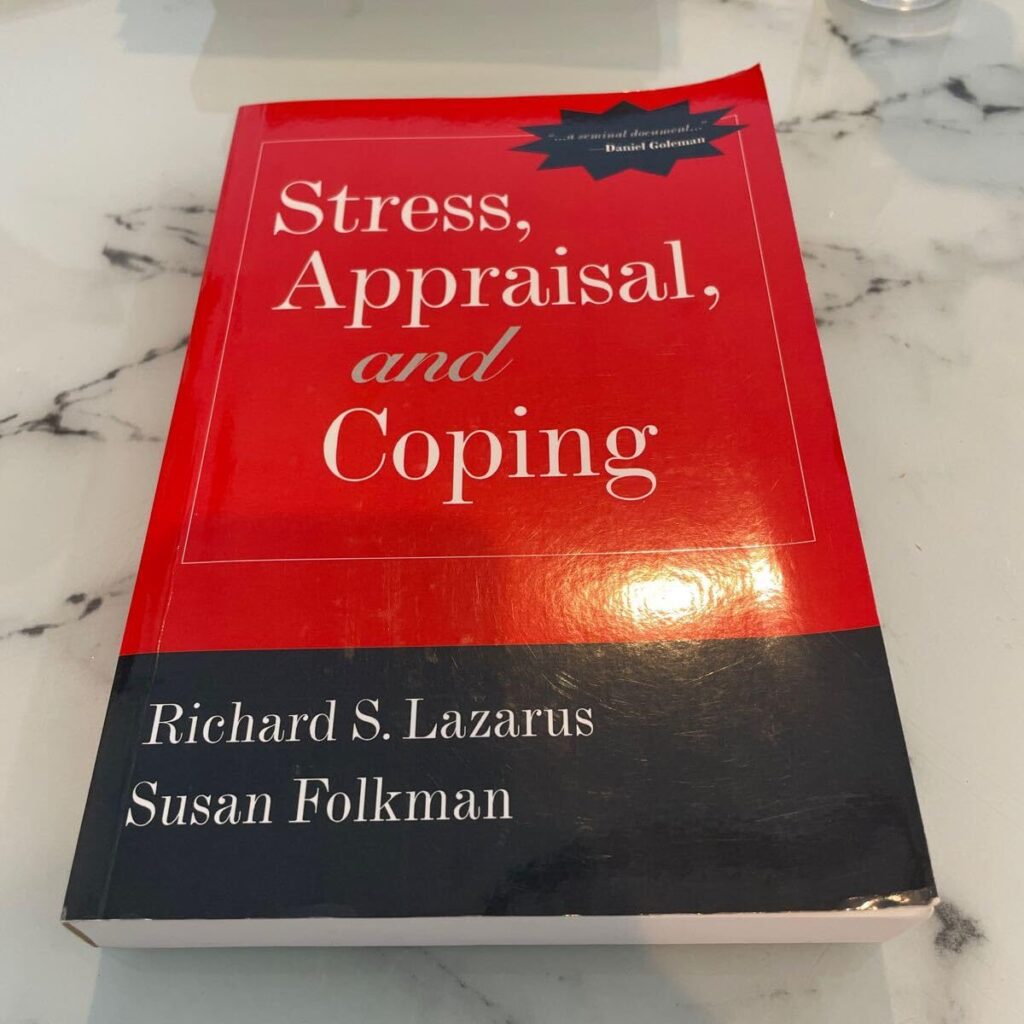
Lazarus and Folkman’s book Stress, Appraisal, and Coping (1984) provides an important theoretical foundation for understanding this process.
2. Hypervigilance: When You Cannot Relax Around Someone
One important mechanism behind emotional exhaustion is hypervigilance.
Hypervigilance describes a heightened state of alertness in which a person continuously monitors their surroundings for possible danger or negative changes.
Although people often associate this response with trauma, it can also appear in relationships characterized by unpredictable reactions, repeated criticism, intimidation, or emotional instability.
For example, imagine someone who lives with a partner whose mood changes unexpectedly.
On some mornings, the partner communicates normally. On other mornings, a simple question produces irritation. Sometimes, silence means nothing, while on other occasions, the same silence becomes a reason for conflict.
Eventually, the other person may begin monitoring small details.
They notice the sound of footsteps, changes in facial expressions, the way a door closes, and even the difference between ordinary silence and angry silence.
They might change their behaviour before the other person expresses any dissatisfaction.
This is psychologically important because the individual no longer responds only to what is happening. They also respond to what they predict might happen.
Consequently, their attention remains occupied by the relationship even when they are doing something completely unrelated.
However, hypervigilance is not proof that someone has PTSD or that another person has a personality disorder. A clinical professional must consider the person’s experiences, symptoms, and wider circumstances before making any diagnosis.
3. The Hidden Mental Cost of Suppressing Your Emotions
Another reason certain relationships become exhausting involves emotional suppression.
Emotional suppression occurs when someone attempts to hide or inhibit an emotional expression after experiencing an emotion.
For example, you might feel hurt during a conversation but continue smiling because expressing your disappointment could create an argument.
You might disagree with someone’s decision but remain silent because previous disagreements resulted in criticism.
Over time, this behaviour can become automatic.
You learn which subjects to avoid, which opinions to hide, and which emotions are safer not to express.
However, emotional suppression does not necessarily eliminate the emotion itself.
You may continue experiencing frustration, sadness, or anxiety internally while presenting a completely different emotional expression externally.
Psychologist James J. Gross has conducted influential research on emotion regulation, particularly the distinction between strategies such as cognitive reappraisal and expressive suppression.
His work helps explain why regulating emotional expression can have psychological and physiological consequences.
Consider two people attending the same family gathering.
The first person feels comfortable expressing disagreement respectfully. The second person carefully monitors every sentence because they fear criticism or humiliation.
Both people attend the same gathering, but their psychological experiences are very different.
The second person spends additional mental effort controlling their expression, anticipating reactions, and preventing conflict.
Therefore, exhaustion may develop not because someone talks too much, but because you cannot communicate naturally around them.
4. When Someone Constantly Needs Emotional Reassurance
Some relationships gradually develop an unequal emotional structure.
One person repeatedly seeks reassurance, validation, attention, or emotional support, while the other becomes responsible for providing it.
Of course, needing reassurance is not inherently unhealthy. Everyone experiences insecurity, and healthy relationships involve supporting one another during difficult periods.
The problem develops when reassurance becomes an endless responsibility.
For example, imagine a person who repeatedly asks their partner whether they are angry, whether they still care, or whether they intend to leave.
The partner provides reassurance, but the relief lasts only briefly. Soon, the same questions return.
Eventually, the reassuring partner may begin organizing their behaviour around preventing the other person’s distress.
They avoid certain conversations, cancel personal activities, and repeatedly explain ordinary decisions.
This pattern can create emotional fatigue because one person carries a disproportionate amount of responsibility for maintaining the relationship’s emotional stability.
In clinical psychology, it is important to distinguish between temporary reassurance needs, anxiety-related patterns, and persistent controlling behaviour. They are not interchangeable.
Nevertheless, relationships become difficult to sustain when one person’s emotional needs consistently leave insufficient room for the other’s.
5. How Attachment Patterns Influence Emotional Relationships
Attachment theory provides another useful perspective.
Psychiatrist John Bowlby developed attachment theory, while psychologist Mary Ainsworth contributed important research on attachment patterns.
Their work helps explain how early relationships with caregivers can influence expectations about closeness, safety, separation, and emotional availability.
For some individuals, uncertainty in relationships produces intense anxiety. They may become highly sensitive to signs of rejection and seek frequent reassurance.
Others respond to emotional demands by withdrawing, minimizing their needs, or avoiding vulnerable conversations.
These patterns can interact in complicated ways.
For example, one person may repeatedly seek closeness when they sense distance, while the other withdraws because they experience the interaction as overwhelming.
The more one pursues, the more the other withdraws. Consequently, both may experience frustration and emotional exhaustion.
However, attachment styles are not permanent identities or psychiatric diagnoses. People can develop greater emotional security through supportive relationships, self-awareness, and appropriate psychological treatment.
It is also important not to assume that every difficult relationship results from childhood trauma. Present circumstances, personality differences, communication habits, and ongoing stress also matter.
6. What Happens to Your Body During Repeated Interpersonal Stress?
Emotional experiences involve biological processes as well as psychological ones.
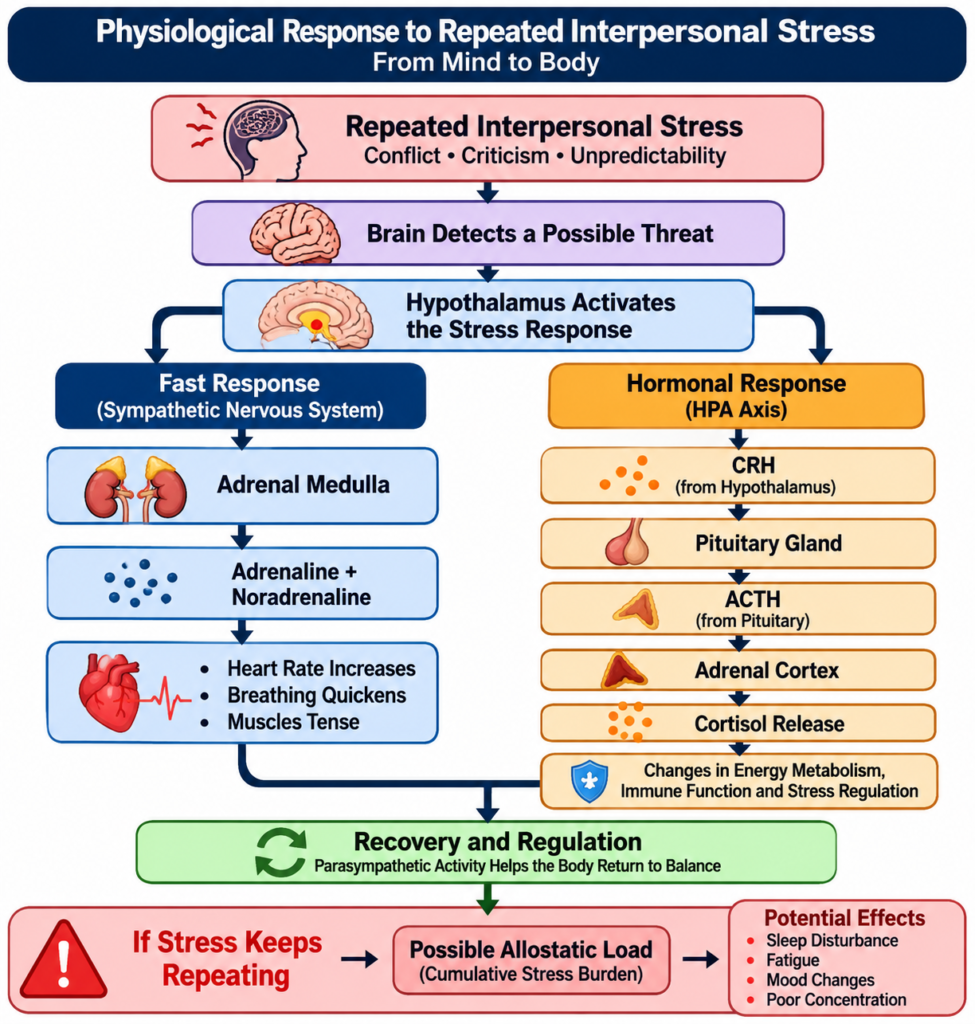
When the brain interprets a situation as threatening, several physiological systems help prepare the body to respond.
One important system is the hypothalamic-pituitary-adrenal axis, commonly known as the HPA axis.
This system coordinates hormonal responses to stress. It involves communication between the hypothalamus, pituitary gland, and adrenal glands.
During a stress response, the body can release cortisol, a hormone that helps regulate energy availability, metabolism, immune activity, and other physiological functions.
During a stress response, the body can release cortisol, a hormone that helps regulate energy availability, metabolism, immune activity, and other physiological functions.
The sympathetic nervous system also contributes to the body’s alert response by influencing heart rate, breathing, and other functions.
These responses serve an important purpose. They help us respond to challenges and potential danger.
However, repeated or prolonged stress can affect sleep, mood, concentration, and physical well-being.
For instance, someone who repeatedly anticipates conflict at home may find it difficult to relax even after an argument ends. They might experience muscle tension, headaches, disrupted sleep, or difficulty concentrating.
Nevertheless, it would be scientifically inaccurate to claim that every emotionally difficult conversation produces harmful cortisol levels or permanently damages the nervous system.
Stress physiology is complex. Individual responses vary, and symptoms can have several possible causes.
The important point is that psychological stress and physical functioning influence one another.
7. Why Your Mind Keeps Replaying Difficult Conversations
Have you ever finished a conversation but continued thinking about it for hours?
Perhaps you replayed something the other person said. You considered alternative responses, questioned your own behaviour, or wondered whether you had misunderstood their intentions.
Psychologists often use the term rumination to describe repetitive thinking about distressing experiences.
Rumination can keep attention focused on an unresolved emotional problem.
For example, imagine that a colleague makes a humiliating comment during a meeting.
Instead of addressing the situation or mentally moving on, you spend the evening replaying the conversation.
You imagine what you should have said. You question why the colleague behaved that way. You even prepare possible responses for the next meeting.
Although the interaction ended hours ago, your mind continues processing it.
The way people interpret and respond to stressful experiences can influence their emotional adjustment.
However, rumination is not always a deliberate choice. It can become a repetitive thinking pattern, particularly when someone feels unable to resolve a conflict or regain a sense of control.
A useful first step involves separating what actually happened from what you fear might happen.
Instead of repeatedly asking yourself why someone behaved a particular way, consider what you can realistically do about the situation.
This shifts attention from endless interpretation towards practical coping.
This shifts attention from endless interpretation towards practical coping.
8. Signs That a Relationship Is Becoming Psychologically Draining
An occasional uncomfortable interaction does not necessarily indicate an unhealthy relationship.
People disagree. They misunderstand one another, experience stress, and sometimes communicate poorly.
However, repeated patterns deserve closer attention.
Consider whether you regularly experience the following:
- You feel anxious before meeting a particular person.
- You constantly monitor your words to avoid criticism.
- You feel responsible for managing their emotional reactions.
- You struggle to express disagreement without anticipating punishment.
- You repeatedly question your memory or interpretation of events.
- You feel relieved when the person leaves.
- You need considerable time to recover after ordinary interactions.
These experiences do not establish a diagnosis of narcissistic personality disorder, emotional abuse, or any other psychiatric condition.
Rather than immediately assigning a label to the other person, examine the repeated behaviour, its impact on your well-being, and whether the relationship allows mutual respect and emotional safety.
A person’s intentions may be difficult to establish. Their repeated behaviour and its consequences are more useful starting points for evaluating a relationship.
9. How to Protect Your Emotional Well-Being
The solution does not always involve ending a relationship. Sometimes, changing the way you participate in it can reduce emotional pressure.
First, identify the situations that repeatedly trigger exhaustion.
Is it criticism? Unpredictability? Repeated arguments? Emotional demands? The inability to express disagreement?
Once you recognize the pattern, you can make more informed decisions.
Establish emotional boundaries.
You can care about someone without accepting responsibility for every emotion they experience.
For example, you can listen to a family member’s concerns without agreeing to discuss the same argument for several hours.
Stop overexplaining ordinary decisions.
You do not need to provide endless justification for every reasonable boundary. Communicate clearly, respectfully, and consistently.
Allow yourself to experience your own emotions.
Instead of automatically dismissing your discomfort, identify what you feel and why. Emotional awareness can help you distinguish between genuine responsibility and unnecessary guilt.
Reduce unnecessary exposure to repeated conflict.
When possible, limit interactions that consistently become hostile or emotionally overwhelming. If you cannot avoid contact, consider shorter conversations, structured communication, or support from a trusted person.
Build relationships outside the stressful environment.
Supportive friendships and healthy social connections can provide perspective and reduce isolation.
Importantly, if you experience intimidation, threats, coercive control, or violence, prioritize safety rather than relying on communication techniques alone.
10. When Emotional Exhaustion Requires Professional Attention
Feeling emotionally exhausted around certain people is not a formal psychiatric diagnosis.
However, persistent exhaustion can overlap with symptoms of anxiety disorders, depressive disorders, trauma-related conditions, sleep disorders, and other health problems.
A psychologist or psychiatrist can assess whether your symptoms reflect a relationship-related stress response or a broader mental health condition.
For example, cognitive behavioural therapy (CBT) can help individuals identify unhelpful thinking patterns, develop coping strategies, and respond differently to stressful situations.
Depending on the person’s history and symptoms, a clinician may also consider trauma-informed therapy, interpersonal psychotherapy, or other evidence-based approaches.
Can medication help?
Medication does not treat an emotionally difficult person or repair an unhealthy relationship.
However, when a qualified clinician identifies an underlying condition such as major depression or an anxiety disorder, medication may form part of an appropriate treatment plan.
Depending on the diagnosis, clinicians may consider antidepressants such as selective serotonin reuptake inhibitors (SSRIs). These medications require an individualized assessment, discussion of potential side effects, and appropriate follow-up.
Benzodiazepines may have a limited role in certain short-term clinical situations, but they carry risks such as dependence, sedation, and withdrawal. They should never become a self-prescribed solution to relationship stress.
If exhaustion persists even when you are away from stressful people, or interferes with everyday functioning, consult a healthcare professional.
Physical conditions such as anaemia, thyroid disorders, sleep problems, and other medical conditions can also contribute to fatigue. A clinician can decide whether a physical examination or laboratory investigations are appropriate.
Do not assume that every symptom has a psychological explanation.
Similarly, do not start, stop, or change psychiatric medication without consulting the prescribing clinician.
Listen to What Your Emotional Exhaustion Is Telling You
Sometimes, the most revealing part of a relationship is not how you feel when someone is present, but how you feel after they leave.
Do you return to your normal emotional state? Can you concentrate again? Do you feel comfortable expressing your thoughts? Or do you spend the next several hours questioning yourself and recovering from an ordinary conversation?
These questions deserve attention.
The goal is not to avoid every person who challenges you or makes you uncomfortable. Healthy relationships sometimes involve difficult conversations, disagreements, and emotional effort.
The difference lies in whether both people can communicate, repair misunderstandings, respect boundaries, and share emotional responsibility.
You should not have to spend every interaction managing another person’s reactions while neglecting your own psychological needs.
A relationship can require effort without requiring constant emotional self-protection.
And learning to recognize that difference is an important part of emotional maturity.
Related Articles
Trauma Bond: Why Your Mind Keeps Returning to the abuser
ADHD: Understanding the Mind Behind Attention, Impulsivity and Executive Function
Stages of Healing: What Psychological Recovery Really Looks Like
How to Recover From Narcissistic Abuse: A Step by Step Guide
FAQs
Yes. Repeated interpersonal stress can activate the body’s stress response systems. Over time, this may contribute to sleep problems, muscle tension, headaches, fatigue, and changes in mood. The effects vary from person to person.
The brain evaluates potential threats and activates the hypothalamus, which helps coordinate the body’s stress response. This can trigger the sympathetic nervous system and the HPA axis, leading to the release of stress-related chemicals and hormones.
Adrenaline produces a rapid response to perceived danger. It can increase heart rate, breathing, and alertness. Cortisol is a hormone involved in longer-lasting stress regulation, energy metabolism, and immune function.
Yes. Stress can increase muscle tension and keep the body in a state of heightened alertness. When this happens repeatedly, a person may experience physical exhaustion, headaches, body aches, or difficulty relaxing.
Allostatic load refers to the cumulative physiological burden associated with repeatedly adapting to stress. When the body’s stress-regulation systems are activated frequently or for prolonged periods, this burden may affect several body systems.
Taking a break, practising slow breathing, getting adequate sleep, engaging in gentle physical activity, and spending time in a safe and supportive environment may help the body return towards balance. If stress is persistent, professional support can also be helpful.
References
- Ainsworth, M. D. S., Blehar, M. C., Waters, E., & Wall, S. (1978). Patterns of attachment: A psychological study of the strange situation. Lawrence Erlbaum Associates.
- Bowlby, J. (1982). Attachment and loss: Vol. 1. Attachment (2nd ed.). Basic Books. (Original work published 1969)
- Gross, J. J. (1998). Antecedent- and response-focused emotion regulation: Divergent consequences for experience, expression, and physiology. Journal of Personality and Social Psychology, 74(1), 224–237.
- Lazarus, R. S., & Folkman, S. (1984). Stress, appraisal, and coping. Springer Publishing Company.
- McEwen, B. S. (2007). Physiology and neurobiology of stress and adaptation: Central role of the brain. Physiological Reviews, 87(3), 873–904.
Reviewed by Ainna Ross
This article is grounded in published psychological research and my own experience recovering from narcissistic abuse. Read more about my background. It's for educational purposes only and isn't a substitute for professional diagnosis or care.
Need support right now? In the US, call or text 988 (Suicide & Crisis Lifeline). In the UK, call Samaritans free on 116 123. If you're in immediate danger, contact your local emergency services.
