
The parts of yourself you refuse to acknowledge do not simply disappear. They can quietly influence your relationships, decisions, emotional reactions, and the way you see other people.
There is a strange thing about human nature. We often spend years trying to become better people while refusing to examine the parts of ourselves that make us uncomfortable.
We want to be kind, but sometimes we feel envy. We want to be patient, but occasionally we experience anger. We want to believe that we are emotionally mature, yet certain people can trigger reactions in us that seem completely out of proportion.
So, what happens to these uncomfortable parts of our personality?
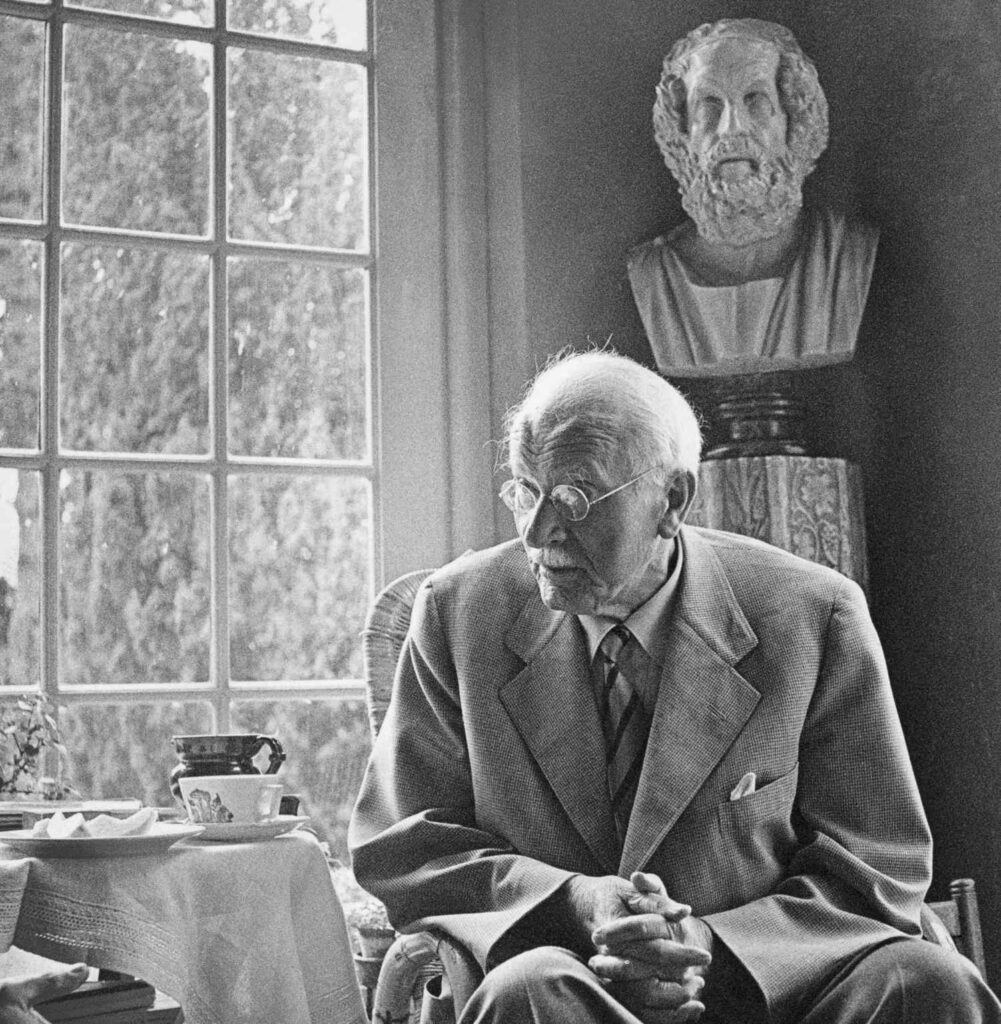
According to Swiss psychiatrist and psychoanalyst Carl Gustav Jung, they become part of what he called the shadow.
Jung introduced one of the most influential ideas in analytical psychology: every human personality contains aspects that the conscious mind does not readily recognise or accept. These aspects may include anger, jealousy, insecurity, selfishness, fear, and even positive qualities such as confidence, creativity, and ambition that a person learned to suppress.
His warning was profound: what we refuse to acknowledge about ourselves can continue to influence our lives from outside our conscious awareness.
This is why understanding the shadow is not simply an interesting psychological exercise. It can become an important part of emotional maturity, self-awareness, and healthier relationships.
What Is the Shadow According to Carl Jung?
Carl Jung developed the concept of the shadow through his work in analytical psychology. He believed that the human personality contains both a conscious identity and unconscious material that the individual does not fully recognise.
The conscious personality represents the person we believe ourselves to be. Jung called this social and psychological identity the persona.
The shadow, however, contains the characteristics, impulses, emotions, and desires that do not fit comfortably into that identity.
For example, imagine someone who has spent their entire life believing that they are always generous, understanding, and selfless. They may find it extremely difficult to admit that they sometimes feel resentment towards people who constantly demand their attention.
Instead of acknowledging that resentment, they suppress it.
However, suppression does not necessarily resolve the underlying emotional conflict. The resentment may emerge through irritation, emotional withdrawal, passive aggression, or sudden outbursts.
The person might even blame everyone else without recognising their own emotional contribution.
The shadow is not necessarily evil. It is simply the part of ourselves that we have not adequately brought into conscious awareness.
And that distinction matters because shadow work is not about becoming ashamed of yourself. It is about becoming honest with yourself.
10 Things That Can Happen When You Refuse to Face Your Shadow
The shadow does not always appear as an obvious personality flaw. Sometimes it appears through repeated emotional patterns, relationship conflicts, and behaviours that a person struggles to explain.
Let’s examine what can happen when someone continually avoids this part of their psychological life.
1. You Start Projecting Your Own Uncomfortable Feelings Onto Others
One of the most important ideas in Jungian psychology is psychological projection.
Projection happens when a person attributes an uncomfortable feeling, characteristic, or impulse within themselves to another person without recognising their own contribution.
For example, consider someone who secretly struggles with jealousy but strongly identifies as a fair and emotionally mature person.
For example, consider someone who secretly struggles with jealousy but strongly identifies as a fair and emotionally mature person.
Whenever another woman receives attention, this individual begins accusing her of being attention-seeking, arrogant, or desperate for validation.
Perhaps the other woman genuinely enjoys attention. However, the intensity of the criticism may reveal something deeper about the person making it.
The uncomfortable question becomes: Why does this particular behaviour produce such a powerful emotional reaction?
This is where shadow work becomes meaningful.
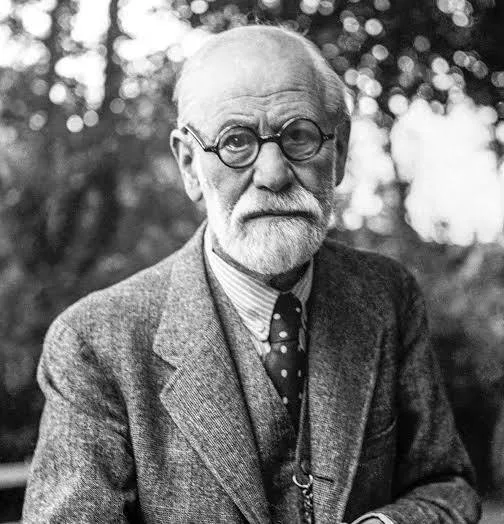
Sigmund Freud, another major figure in psychoanalysis, explored psychological defence mechanisms, including projection. Although Freud and Jung developed different theories of the unconscious, both recognised that people can defend themselves against feelings and impulses they find difficult to accept.
However, there is an important distinction: not every criticism is projection. Sometimes another person’s behaviour really is harmful. Self-reflection should never become an excuse to deny reality.
2. Your Relationships Begin Repeating the Same Painful Patterns
Have you ever noticed someone experiencing the same relationship problems with different people?
One partner is supposedly selfish. The next is controlling. Another is emotionally unavailable. Eventually, every relationship seems to produce the same disappointment.
Of course, sometimes people repeatedly encounter genuinely unhealthy partners. Nevertheless, repeated patterns deserve examination.
A person who struggles to communicate anger, for instance, might repeatedly choose relationships in which their needs remain unexpressed.
They may agree to everything, avoid difficult conversations, and pretend that nothing bothers them.
Then, after months of accumulated resentment, they suddenly become emotionally distant or explode over something relatively small.
The underlying problem is not necessarily a lack of love. It may involve an inability to recognise and communicate uncomfortable emotions.
When you refuse to face your shadow, you may continue repeating patterns without understanding your own participation in them.
This does not mean blaming yourself for someone else’s mistreatment. It means recognising the parts of a relationship pattern that you have the power to change.
3. Suppressed Anger Can Emerge in Unexpected Ways
Many people grow up learning that anger is unacceptable.
A child might hear:
- Good children never get angry.
- Don’t answer back.
- Always respect your elders.
- Keep quiet if someone upsets you.
These messages may teach children to hide anger rather than understand and regulate it.
As adults, they might struggle to express disagreement. They may tolerate disrespect, avoid confrontation, and feel guilty whenever they establish a boundary.
However, suppressed anger does not automatically disappear.
It may emerge through sarcasm, constant irritation, emotional withdrawal, resentment, or disproportionate reactions.
Jung’s concept of the shadow offers a useful way to understand this conflict. The individual has identified with being agreeable and peaceful, while anger has become incompatible with that identity.
The solution is not to become aggressive.
Instead, the person needs to recognise anger as an emotional signal, understand what triggers it, and learn to express it responsibly.
4.You Become Trapped Behind a False Personality
Jung used the term persona to describe the social face people present to the world.We all have different roles.
We behave differently with colleagues, family members, friends, and strangers.
That is normal.
The problem begins when someone becomes so attached to their public identity that they cannot acknowledge anything that contradicts it.
For example, a person might build an entire identity around being the perfect parent.They always appear patient, responsible, and caring.
However, privately, they feel exhausted, resentful, and sometimes emotionally disconnected from their children.
Instead of acknowledging these feelings and seeking support, they become increasingly concerned with maintaining their image.
Consequently, the distance between their public personality and private emotional experience grows.
This is one reason Carl Jung’s shadow remains relevant today. Psychological maturity requires more than maintaining an attractive personality. It requires the courage to recognise what exists underneath it.
5. You Become Extremely Judgmental of Other People
Consider someone who constantly criticises people for being selfish.
They complain whenever someone prioritises personal needs, refuses a favour, or establishes a boundary.
Yet this same person secretly wishes they could say no without feeling guilty.
They have spent years suppressing their own needs because they believe a good person should always make sacrifices.
Now, whenever someone else demonstrates independence, it irritates them.
Sometimes the qualities we condemn in others are connected to qualities we have forbidden ourselves to express.
This does not mean every judgment reveals a hidden personal desire. It means repeated, emotionally intense judgments can provide useful information about our internal conflicts.
Jungian analysts often explore these reactions because they can reveal unconscious expectations, fears, and disowned characteristics.
6. You Lose Touch With Your Authentic Needs
An overlooked aspect of Carl Jung’s shadow is that it does not contain only negative qualities.
It can also contain positive characteristics that a person learned to suppress.
Think about a woman who grew up in a household where independent opinions were considered disrespectful.
Whenever she expressed disagreement, someone accused her of being difficult.
Eventually, she learned to remain quiet.
Years later, she might struggle to make decisions, negotiate for herself, or pursue professional opportunities.
Her suppressed qualities may include confidence, ambition, independence, and assertiveness.
In other words, she has not only hidden her anger. She has also hidden her strength.This is why shadow integration is not about becoming a darker person.
It is about reclaiming the parts of yourself that never received permission to develop.
7. Your Emotional Reactions Become Disproportionate
Have you ever reacted strongly to something and later wondered why it affected you so much?
A small disagreement might produce overwhelming anger. A delayed reply might trigger intense rejection. A harmless comment might make someone feel humiliated for hours.
Sometimes the present situation touches an older emotional wound.
For example, someone who experienced repeated humiliation during childhood may interpret ordinary criticism as a serious personal attack.
Their reaction may involve more than the immediate situation. It may also reflect unresolved experiences and learned emotional responses.
Modern psychology offers several ways to understand this phenomenon, including emotional conditioning, cognitive schemas, attachment patterns, and trauma-related responses.
Jungian shadow theory offers another interpretive perspective.
However, it is important not to assume that every strong reaction comes from an unconscious shadow. Anxiety disorders, trauma-related conditions, mood disorders, and other psychological difficulties can also influence emotional responses.
The purpose of self-awareness is to investigate these reactions, not diagnose yourself through them.
8. You Struggle to Accept Responsibility
One of the most uncomfortable aspects of facing your shadow is accepting that you are not always the innocent person in every conflict.
Perhaps you hurt someone while trying to protect your pride.
Perhaps you manipulated a situation because you feared rejection.
Perhaps you blamed another person for something you were unwilling to acknowledge about yourself.
Self-awareness requires the ability to say:
- I was wrong.
- I acted out of insecurity.
- I allowed my fear to influence my decisions.
- I hurt someone, and I need to take responsibility.
This is not self-hatred. It is psychological accountability.
A person who cannot acknowledge personal mistakes often spends considerable energy defending an idealised version of themselves.
By contrast, someone who accepts their imperfections has more opportunities to learn, apologise, and change.
9. Your Unconscious Conflicts Can Affect Your Wellbeing
Long-term emotional distress deserves attention, particularly when it affects sleep, concentration, relationships, work, or daily functioning.
Unresolved conflict, chronic stress, emotional avoidance, and difficult relationship experiences can contribute to psychological distress.
However, we need to be scientifically careful here.
Jung’s shadow is a theoretical concept within analytical psychology. Modern clinical science does not establish that an unintegrated shadow directly causes depression, anxiety, physical illness, or any particular psychiatric disorder.
Nevertheless, modern psychological treatments do examine processes that overlap with aspects of shadow work.
For example, cognitive behavioural therapy helps people identify unhelpful thought patterns, emotional responses, and behaviours. Other therapies explore trauma, interpersonal difficulties, emotional regulation, and recurring relationship patterns.
The important point is that psychological suffering deserves proper assessment rather than simplistic explanations.
10. You Remain Divided Between Who You Are and Who You Pretend to Be
Perhaps the deepest consequence of refusing to face your shadow is an ongoing internal conflict.
You want to be loved, but you fear vulnerability.
You want independence, but you fear disappointing people.
You want to express anger, but you fear becoming a bad person.
You want recognition, but you feel ashamed of wanting attention.
Eventually, you may spend more energy controlling your personality than understanding it.
Jung believed that psychological development involved bringing unconscious aspects of the personality into greater awareness.
He called this lifelong process individuation.
The aim was not perfection. It was greater psychological wholeness.
That distinction is essential.
You do not become whole by eliminating every uncomfortable feeling. You become more self-aware by recognising your feelings without allowing them to control your behaviour.
What Does Shadow Integration Actually Mean?
Jung did not suggest that people should act on every hidden desire or impulse.
Instead, he proposed that people should recognise these aspects of their personalities and develop a conscious relationship with them.
This process is known as shadow integration.
It involves three important steps.
First, recognition.
You acknowledge feelings you would rather deny. You admit when you feel jealous, insecure, angry, competitive, or afraid.
Second, understanding.
You investigate where these feelings come from. Did you learn to suppress anger during childhood? Do you associate independence with rejection? Are you trying to maintain an image that leaves no room for ordinary human imperfections?
Third, responsibility.
You accept that having an emotion does not give you permission to hurt someone.
You can acknowledge anger without becoming abusive. You can recognise jealousy without controlling your partner. You can accept selfish impulses without allowing them to determine your actions.
This is the difference between recognising your shadow and identifying with it.
How to Face Your Shadow: 7 Psychological Exercises
Shadow work should involve honest reflection rather than endless self-criticism.
Here are seven practical exercises inspired by Jungian analytical psychology and modern psychological approaches.
1. Examine your strongest emotional reactions.
Write down situations that repeatedly make you unusually angry, jealous, defensive, or uncomfortable.
2. Identify repeated judgments.
Ask yourself why certain behaviours in other people irritate you so intensely.
3. Explore your childhood conditioning.
Consider which emotions your family encouraged and which emotions they discouraged.
4. Recognise your hidden needs.
Are you suppressing your ambition, independence, desire for affection, or need for personal boundaries?
5. Keep an emotional journal.
Record what happened, what you felt, how you reacted, and what you needed at that moment.
6. Practise accountability.
When you make a mistake, acknowledge it without immediately finding someone else to blame.
7. Seek professional guidance when necessary.
A qualified therapist can help you explore difficult emotional patterns without overwhelming yourself.
One particularly useful question is:
What am I refusing to acknowledge about myself because accepting it would challenge the person I believe I am?
Do not rush to answer. Sometimes the most meaningful psychological discoveries require patience.
What Does Modern Psychology Say About Carl Jung’s Shadow?
Carl Jung’s shadow remains influential in psychotherapy, particularly within analytical psychology. However, we should distinguish between a historically influential psychological theory and a scientifically established clinical mechanism.
The concept of the shadow provides a framework for exploring unconscious motivations, disowned characteristics, emotional conflicts, and projection.
Modern clinical psychology also examines related processes through different theoretical frameworks.
For example:
Sigmund Freud and defence mechanisms:
Freud’s psychoanalytic tradition explored how people use unconscious psychological defences to manage uncomfortable feelings and internal conflicts. His work on repression and projection helped shape later discussions of unconscious processes.
Aaron Beck and cognitive behavioural therapy:
Beck’s work demonstrated the importance of identifying automatic thoughts and underlying beliefs that influence emotional responses and behaviour. CBT provides structured techniques for examining and changing these patterns.
Carl Rogers and self acceptance:
Rogers explored the tension between a person’s actual experiences and the idealised image they feel they must maintain. His person centred approach emphasised empathy, acceptance, and psychological growth.
These perspectives are not identical to Jung’s theory. Nevertheless, they offer complementary ways to understand why people sometimes struggle to acknowledge uncomfortable aspects of themselves.
Is There Clinical Evidence for Jungian Psychotherapy?
Yes, researchers have investigated Jungian psychotherapy.
A 2013 review by clinical psychologist Christian Roesler, published in Behavioral Sciences, examined empirical research on Jungian psychotherapy. The reviewed studies reported improvements in psychological symptoms, interpersonal problems, personality functioning, and everyday life.
However, these findings should be interpreted carefully. The available research does not establish that Jung’s shadow is a separately measurable clinical mechanism or that shadow integration alone treats psychiatric disorders.
The International Association for Analytical Psychology also provides an informative introduction to the shadow and its role in analytical treatment.
Can Medication Help With Problems Related to the Shadow?
This is an important clinical distinction.
There is no medication specifically designed to integrate the Jungian shadow.
Shadow work is a psychological process, not a medical diagnosis.
However, someone exploring difficult emotional patterns may also experience depression, anxiety, panic attacks, trauma related symptoms, or other mental health conditions.
In such cases, a qualified psychiatrist or medical professional may recommend treatment based on the person’s clinical assessment.
Depending on the condition, treatment may include:
- Antidepressants, including SSRIs or SNRIs, for certain depressive and anxiety disorders.
- Specific anti anxiety medications when clinically appropriate.
- Mood stabilising medication for conditions such as bipolar disorder.
- Psychotherapy, including CBT, trauma focused therapies, or other suitable approaches.
Sometimes medication and psychotherapy work together.For example, the National Institute of Mental Health explains that psychotherapy can help people understand troubling emotions, thoughts, and behaviours, while medication can help manage symptoms associated with particular mental disorders.
The NHS also recognises that moderate to severe depression may require antidepressants alongside talking therapy.
Importantly, medication should never be started, stopped, or adjusted without appropriate medical advice.
Someone experiencing persistent emotional distress should not assume that shadow work alone will resolve the problem.
Clinical assessment matters, especially when symptoms interfere with daily functioning.
Why Facing Your Shadow Is a Lifelong Process
One of the most interesting aspects of Jung’s philosophy is that psychological development does not end when we become adults.
People change. Their relationships change. Their responsibilities change. Experiences expose characteristics they might never have recognised before.
Someone who once considered themselves completely independent may discover how deeply they fear abandonment.
Likewise, someone who always considered themselves weak may discover that they possess courage, ambition, and independence they never allowed themselves to express.
This is why individuation matters.
Jung believed that becoming psychologically whole involved developing a more conscious relationship with the different aspects of the personality.
The goal was not to become flawless.
It was to become more aware, more responsible, and less controlled by unconscious patterns.
The Person You Refuse to See May Be Influencing Your Life
Perhaps the most uncomfortable part of Carl Jung’s shadow theory is that we cannot understand ourselves entirely through the image we have created.
We may recognise our kindness but overlook our resentment.
We may celebrate our patience but deny our anger.
We may criticise another person’s arrogance while remaining unaware of our own need for recognition.
And sometimes, the qualities we have spent years suppressing are precisely the qualities we need to develop.
Facing your shadow does not mean accepting every thought as truth or acting on every hidden impulse.
It means developing the courage to examine yourself honestly.
You do not have to become everything you have hidden. You have to understand why you hid it, what purpose it serves, and whether it still belongs in your life.
Perhaps that is the deeper lesson in Jung’s work.
You cannot build a complete understanding of yourself by acknowledging only the parts you like.
Psychological growth begins when you stop running from uncomfortable truths and start learning from them.
Related Articles
FAQs
Common warning signs include repeatedly blaming others, becoming overly defensive when criticised, judging people harshly, suppressing anger, experiencing recurring relationship conflicts, and struggling to accept personal mistakes. According to Jungian psychology, these patterns may indicate aspects of yourself that you have difficulty recognising or accepting.
When you continually avoid your shadow, you may remain unaware of emotional conflicts, unconscious projections, and recurring behavioural patterns. These patterns can affect your relationships, self-esteem, emotional regulation, and personal development. However, they do not automatically lead to psychological disorders.
Carl Jung’s shadow theory suggests that unrecognised emotions and personality traits can influence how people interpret and respond to others. For example, someone who suppresses their own anger may become uncomfortable around people who express disagreement openly. Recognising these reactions can help improve communication and emotional awareness.
Shadow work may encourage self-reflection and help people recognise uncomfortable emotions, beliefs, and recurring patterns. However, it is not a clinically established treatment for anxiety or depression. Evidence-based therapies, such as cognitive behavioural therapy, and appropriate medical treatment can help manage mental health conditions.
Begin by observing your strongest emotional reactions, identifying recurring judgments, examining childhood conditioning, and writing down feelings you usually suppress. Ask yourself why particular situations make you defensive or uncomfortable. If this process brings up overwhelming memories or trauma-related distress, consider working with a qualified mental health professional.
References
- Serebrennikova, N. The Shadow. International Association for Analytical Psychology.
- Roesler, C. (2013). Evidence for the Effectiveness of Jungian Psychotherapy. Behavioral Sciences.
- National Institute of Mental Health. Psychotherapies.
- National Institute of Mental Health. Mental Health Medications.
- Jung, C. G. (1959). Aion: Researches into the Phenomenology of the Self. Princeton University Press.
Reviewed by Ainna Ross
This article is grounded in published psychological research and my own experience recovering from narcissistic abuse. Read more about my background. It's for educational purposes only and isn't a substitute for professional diagnosis or care.
Need support right now? In the US, call or text 988 (Suicide & Crisis Lifeline). In the UK, call Samaritans free on 116 123. If you're in immediate danger, contact your local emergency services.
