

Healing is not simply the moment when you stop thinking about what happened. It is the gradual process of becoming safe enough to feel, strong enough to understand, and free enough to build a life that is no longer organized around your pain.
When people search for the stages of healing, they often imagine a neat staircase.
First you accept what happened. Then you process it. Then you forgive. Finally, you move on.
Real psychological healing rarely works that way.
In fact, recovery can be surprisingly messy. You may feel peaceful for several weeks and then suddenly find yourself crying after hearing a familiar song. You may believe you have moved beyond an experience, only to discover that a particular relationship, anniversary, place, or conversation brings an old reaction back.
That does not automatically mean you have failed.
It may mean that your mind is continuing to integrate something that once overwhelmed your ability to process it.
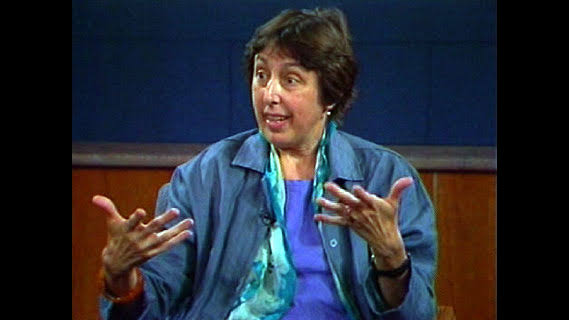
Psychiatrist Judith Herman, whose work has profoundly influenced modern trauma theory, conceptualized trauma recovery around three broad tasks: establishing safety, remembering and mourning, and reconnecting with ordinary life. Her framework emphasizes that trauma can damage a person’s sense of safety, autonomy, identity, and connection with others.
However, these stages of healing should not be treated as rigid clinical steps that every person must complete in exactly the same order.
Healing is much more human than that.
What Are the Stages of Healing?
The stages of healing can be understood as broad psychological tasks rather than fixed periods of time.
A person recovering from trauma, prolonged emotional abuse, grief, betrayal, or another deeply distressing experience may move between these tasks repeatedly.
One week may be dominated by safety.
Another may bring intense grief.
Later, the person may become interested in relationships, creativity, work, spirituality, or personal goals again.
Then an unexpected trigger may temporarily bring them back to an earlier task.
This does not necessarily represent regression.
Rather, psychological recovery often involves revisiting old material from a new level of stability.
The American Psychological Association also cautions against treating grief as a predictable progression through fixed stages. Research and clinical observation show substantial individual variation, and grief can fluctuate rather than move in a simple straight line.
Therefore, think of the stages of healing as a map, not a timetable.
Stage 1: Safety Comes Before Deep Healing
The first of the stages of healing is safety.
This sounds obvious until we consider what psychological safety actually means.
Safety is not merely being physically away from a harmful situation.
It can also involve feeling safe inside your own body, having predictable routines, sleeping adequately, knowing where your boundaries are, and developing relationships in which you do not constantly anticipate rejection, humiliation, manipulation, or danger.
Judith Herman placed safety at the beginning of trauma recovery because psychological processing becomes extremely difficult when a person remains overwhelmed by ongoing threat.
Imagine someone who has spent years in a relationship where every disagreement could turn into criticism.
They finally leave.
Everyone around them expects relief.
Instead, they become hypervigilant.
They repeatedly check their phone.
They rehearse conversations before having them.
They interpret a delayed reply as rejection.
They apologize excessively.
They may even feel uncomfortable when somebody treats them kindly.
Why?
Because the nervous system does not immediately update itself simply because circumstances have changed.
The person may intellectually know, “I am safe now.”
Yet their body may still behave as if danger is nearby.
What safety can involve
During this stage, healing may involve:
- establishing physical safety
- reducing exposure to ongoing harm
- improving sleep routines
- eating regularly
- reconnecting with supportive people
- learning emotional regulation skills
- identifying personal boundaries
- managing overwhelming anxiety
- creating predictable daily routines
- seeking professional assessment when symptoms interfere with life
Stage 2: Understanding What Actually Happened
The second part of the stages of healing involves developing a clearer understanding of the experience.
This does not necessarily mean repeatedly describing every painful detail.
Instead, it means gradually moving from confusion toward coherence.
Traumatic experiences can leave people with questions such as:
- “Why did I allow this?”
- “Why didn’t I leave earlier?”
- “Why didn’t I recognize it?”
- “Was everything my fault?”
- “Why did I react that way?”
- “Why do I still miss someone who hurt me?”
These questions can become more painful than the original memory because people frequently interpret their survival responses as character flaws.
For example, someone might describe themselves as weak because they stayed in a harmful relationship.
A trauma informed perspective asks a different question:
What circumstances made leaving difficult?
That question does not remove personal responsibility from someone’s future choices. Instead, it creates enough psychological space to understand the past without automatically turning the entire story into self condemnation.
This distinction matters.
Understanding is not the same as excusing.
And accepting reality is not the same as approving of what happened.
Stage 3: Remembrance and Mourning
The third part of the stages of healing is often the most emotionally demanding.
Judith Herman described this period as remembrance and mourning. The person gradually develops a coherent narrative of what happened while also grieving what was lost.
That loss may be much larger than the event itself.
Someone recovering from childhood emotional neglect may grieve the childhood they deserved but never experienced.
Someone recovering from betrayal may grieve the future they imagined.
Someone recovering from betrayal may grieve the future they imagined.
Someone leaving an abusive relationship may grieve the version of the relationship they hoped would eventually exist.
Someone experiencing complicated grief may mourn not only a person but also routines, identity, security, companionship, and future plans.
This is why healing can sometimes become more painful before it becomes lighter.
When a person has spent years surviving, there may have been little psychological space for grief.
Later, when safety increases, feelings that were previously suppressed or postponed can become more accessible.
That does not mean the person is becoming weaker.
Sometimes it means they finally have enough psychological space to feel what they previously had to survive.
You do not have to force traumatic memories
This point is especially important.
Trauma processing should not become an exercise in overwhelming yourself.
Herman emphasized the need to balance confronting traumatic memories with maintaining safety. Moving too quickly can produce overwhelming distress, while avoiding all traumatic material can maintain difficulties.
That is one reason trauma focused treatment should be guided by an appropriately trained professional when significant PTSD symptoms are present.
Evidence based treatments include Prolonged Exposure, Cognitive Processing Therapy, and EMDR. Current VA and Department of Defense clinical guidance recommends trauma focused psychotherapy as a leading treatment approach for PTSD.
Stage 4: Grieving the Person You Were Before
Another important part of the stages of healing involves mourning changes in identity.
People often assume healing means returning to exactly who they were before the painful experience.
Psychological recovery may look different.
Perhaps you used to trust everyone.
Now you have boundaries.
Perhaps you used to avoid conflict at any cost.
Now you can tolerate disagreement.
Perhaps you believed that keeping everyone happy was your responsibility.
Now you understand that another person’s disappointment does not automatically mean you have done something wrong.
Perhaps you spent years defining yourself through another person’s approval.
Now you are beginning to ask:
“What do I actually want?”
That question can feel strangely uncomfortable after prolonged emotional control.
Trauma can interfere with autonomy and connection. Herman’s work emphasizes that recovery involves rebuilding capacities such as trust, autonomy, identity, competence, and intimacy.
Therefore, healing does not always mean becoming the old you again.
Sometimes it means becoming someone who has greater awareness, stronger boundaries, and a more realistic understanding of relationships.
Stage 5: Rebuilding Trust Without Becoming Naive
One of the most misunderstood stages of healing involves trust.
After betrayal or prolonged emotional harm, people often move toward one of two extremes.
They may trust everyone too quickly because they desperately want connection.
Or they may decide that nobody can ever be trusted again.
Neither extreme necessarily represents healthy recovery.
Healthy trust is more nuanced.
It allows you to observe someone’s behavior over time.
You notice whether their words match their actions.
You notice whether they respect boundaries.
You notice how they behave when disappointed.
You notice whether disagreement becomes punishment.
You notice whether vulnerability becomes ammunition later.
Most importantly, you learn that trust does not have to be given all at once.
Judith Herman described recovery as involving the ability to distinguish between appropriate trust and situations where trust is not warranted.
That is very different from becoming emotionally closed.
Healing does not require you to believe everyone is good.
It requires learning that you can protect yourself while remaining capable of connection.
Stage 6: Reconnection With Life
The later stages of healing involve returning to life.
This stage is sometimes misunderstood because people expect a dramatic transformation.
Often, reconnection begins quietly.
You start enjoying a cup of tea again.
You laugh without immediately feeling guilty.
You make plans for next month.
You become interested in learning something.
You notice the sunset.
You call a friend because you genuinely want to talk rather than because you need reassurance.
You begin making decisions based on what you value rather than what will prevent someone else’s anger.
These moments may look insignificant from the outside.
They are not.
They demonstrate that the traumatic experience is gradually becoming one part of your history rather than the organizing principle of your entire existence.
Herman described this stage as reconnecting with ordinary life, rebuilding relationships, developing aspirations, and creating meaning after trauma.
Stage 7: Creating Meaning After Pain
A deeper understanding of the stages of healing requires one more question:
“What do you do with what happened?”
Meaning does not mean believing that trauma was good for you.
It does not mean saying that everything happens for a reason.
It does not mean romanticizing suffering.
Instead, meaning can involve deciding what the experience means within the larger story of your life.
Perhaps you become more protective of your boundaries.
Perhaps you develop greater compassion for people experiencing psychological distress.
Perhaps you become a better parent because you consciously choose not to repeat patterns you experienced.
Perhaps you develop a stronger sense of identity.
Perhaps you simply decide:
“This happened to me, but it will not determine every chapter that comes afterward.”
That is meaning without glorifying pain.
Why the Stages of Healing Are Not Linear
The biggest misconception about the stages of healing is that progress should move upward in a straight line.
Human psychology rarely behaves that way.
You can feel significantly better and still experience a difficult day.
You can understand why something happened and still miss someone.
You can forgive yourself and still feel angry.
You can establish boundaries and still occasionally doubt yourself.
You can experience months of stability and then encounter a trigger.
Therefore, a difficult day does not automatically erase months of progress.
Think of healing less like climbing stairs and more like learning a landscape.
You may know the road now even when you occasionally walk through an old neighborhood.
What Happens in the Brain and Body During Healing?
The stages of healing also have a biological dimension.
Trauma can affect attention, sleep, emotional regulation, threat detection, memory, and physiological arousal.
A person may experience increased alertness, exaggerated startle responses, intrusive memories, nightmares, emotional numbness, difficulty concentrating, sleep disruption, irritability, and avoidance.
However, experiencing some of these symptoms does not automatically mean someone has PTSD.
A diagnosis requires appropriate clinical assessment.
Evidence based psychological treatment remains central to PTSD care, particularly trauma focused cognitive behavioral approaches and EMDR.
This distinction matters because popular psychology sometimes turns normal distress into a diagnosis.
Healing should not begin with labeling every painful emotion as a disorder.
It should begin with understanding the person and the context.
Medication During the Stages of Healing
Medication can sometimes have an important role in psychological recovery, particularly when someone has clinically significant PTSD, depression, anxiety, severe sleep problems, or another diagnosed condition.
However, medication is not a universal requirement for healing.
For PTSD specifically, current clinical guidance gives an important role to trauma focused psychotherapy. When appropriate psychotherapy is unavailable, not feasible, or not preferred, medication can be considered.
Evidence is strongest for certain medications, including the SSRIs sertraline and paroxetine, and the SNRI venlafaxine.
Medication decisions should be individualized by a qualified clinician because effectiveness, side effects, other medications, physical health, pregnancy considerations, substance use, and coexisting psychiatric conditions can all affect treatment choices.
Medication can reduce symptoms.
It does not automatically process the meaning of an experience, rebuild relationships, establish boundaries, or teach someone how to feel safe with intimacy again.
That is why clinical care often involves more than one dimension.
When Should You Consider Professional Help?
The stages of healing do not require professional therapy in every situation.
People can experience painful life events and gradually recover with time, supportive relationships, healthy routines, and personal coping strategies.
However, professional help becomes particularly important when symptoms persist, intensify, or interfere with daily functioning.
Consider speaking with a psychologist, psychiatrist, therapist, or other qualified mental health professional if you experience persistent nightmares or intrusive memories, severe anxiety, prolonged emotional numbness, significant sleep disruption, inability to function at work or home, persistent avoidance, severe depression, substance misuse, repeated self destructive behavior, intense dissociation, ongoing fear after the danger has ended, or thoughts of suicide or self harm.
If someone is in immediate danger or experiencing thoughts of suicide or self harm, they should seek urgent local emergency or crisis support rather than relying on an online article.
Clinical assessment matters because different conditions can produce similar symptoms.
A Deeper Example of the Stages of Healing
Consider a woman named Sara.
For years, Sara lived in a relationship where criticism became normal.
Her partner rarely shouted, so she initially questioned whether the relationship was genuinely harmful.
Instead, the damage appeared through smaller patterns.
She stopped expressing opinions.
She monitored his mood.
She apologized when he became upset.
She gradually stopped seeing friends because explaining every interaction became exhausting.
When the relationship finally ended, Sara expected immediate relief.
Instead, she became anxious.
She could not sleep properly.
A friend would not reply for several hours and Sara would immediately assume she had done something wrong.
At first, she believed something was wrong with her.
Therapy helped her recognize that her reactions made sense within the context of what she had experienced.
Her first task was not forgiveness.
It was safety.
She established routines, strengthened social support, learned grounding skills, and began identifying what made her feel secure.
Later, she began exploring memories she had spent years minimizing.
She grieved the relationship she wanted but never truly had.
She also grieved the years she spent doubting herself.
Eventually, something changed.
She began making decisions without mentally consulting the imagined reaction of her former partner.
She started painting again.
She accepted invitations from friends.
She learned to say no without producing a ten minute explanation.
One afternoon, she noticed something that surprised her.
She had spent the entire morning thinking about her future and had not thought about the relationship once.
She did not celebrate because she had forgotten.
She celebrated because she had remembered something more important.
Her life was becoming larger than what had happened to her.
That is one of the deepest meanings of the stages of healing.
What Healing Does Not Require
The stages of healing do not require you to forgive someone before you are ready, forget what happened, maintain contact with someone who harmed you, pretend everything is fine, stop feeling sad, become positive all the time, explain your pain to everyone, reconcile with someone who hurt you, erase difficult memories, or become grateful for trauma.
Healing also does not require you to prove that you are completely unaffected.
A scar can remain without controlling the person who carries it.
The Role of Relationships in the Stages of Healing
Human beings rarely heal entirely in isolation.
Supportive relationships can provide emotional regulation, perspective, belonging, and opportunities to experience safe connection.
However, supportive relationships should not become another form of dependency.
Healthy support says:
“I am here with you.”
Unhealthy support can become:
“You cannot cope without me.”
The difference is important.
Good support helps a person develop greater capacity.
It does not replace their autonomy.
The Most Important Lesson About the Stages of Healing
Perhaps the most important thing to understand about the stages of healing is that recovery is not measured by how rarely you remember the past.
It is measured by how much freedom you have in the present.
You may still remember.
You may still feel sadness.
You may still have difficult days.
You may still feel sadness.
You may still have difficult days.
But gradually, the memory no longer dictates every decision.
You can experience closeness without immediately expecting abandonment.
You can establish boundaries without drowning in guilt.
You can experience disagreement without assuming disaster.
You can enjoy something without waiting for it to disappear.
You can imagine the future without organizing it entirely around preventing another painful past.
That is psychological freedom.
Final Thoughts on the Stages of Healing
The stages of healing are not a test you pass.
They are broad psychological tasks that can help us understand recovery from trauma, grief, abuse, betrayal, and other overwhelming experiences.
Judith Herman’s influential framework begins with safety, moves toward remembrance and mourning, and eventually turns toward reconnection with life.
Yet the most important lesson is not the number of stages.
It is the understanding that healing requires both protection from ongoing harm and the gradual restoration of agency, connection, meaning, and hope.
Some days you will feel strong.
Other days you may feel as though you have returned to the beginning.
Sometimes healing looks like moving forward.
Sometimes it looks like finally allowing yourself to feel something you were once too overwhelmed to feel.
And sometimes healing looks remarkably ordinary.
You sleep.
You laugh.
You make a plan.
You say no.
You trust yourself.
You notice that you are no longer waiting for someone else to give you permission to live.
And eventually, the question changes.
Instead of asking:
“How do I become the person I was before?”
you may begin asking:
“Who can I become now?”
That question may be where healing becomes more than recovery.
It becomes reconstruction.
Related Articles
What Is Real Depression? How Clinical Depression Is Different?
Why You Overthink Everything: The Psychology Behind It
DARVO Explained:One of the Most Powerful Manipulation Tactics
Why Does a Narcissist Come Into the Life of an Empath?
FAQs
The main stages of healing can be understood as broad psychological tasks rather than fixed steps. Judith Herman’s influential trauma recovery framework focuses on establishing safety, processing memories and grief, and reconnecting with life. People may move between these stages rather than experiencing them in a predictable order.
There is no universal timeline for healing. Recovery depends on factors such as the nature and duration of the experience, current safety, social support, physical health, previous experiences, coping abilities, and access to appropriate treatment. Progress can occur gradually, with periods of improvement followed by temporary emotional difficulties.
Safety is often considered the foundation of emotional healing, particularly after trauma. Safety can involve physical protection, stable routines, supportive relationships, emotional regulation, adequate sleep, and freedom from ongoing abuse or danger. Without sufficient safety, deeper psychological processing can become much more difficult.
No. Healing is rarely completely linear. A person can feel better for months and then experience distress after an unexpected reminder. This does not necessarily mean they have returned to the beginning. Triggers, anniversaries, relationships, and stressful life events can temporarily reactivate emotional responses.
Sometimes people experience stronger emotions after their circumstances become safer. During survival, a person may focus primarily on getting through each day. Once safety improves, previously postponed grief, anger, fear, or sadness may become easier to feel. However, worsening symptoms should not automatically be interpreted as a normal part of healing. Persistent or severe distress deserves professional assessment.
No. Psychological healing does not require forgetting. Instead, healing can involve remembering an experience without allowing it to control every aspect of the present. The memory may remain part of someone’s history while becoming less emotionally overwhelming and less influential over their decisions.
No. Forgiveness is not a universal requirement for psychological recovery. A person can heal by establishing boundaries, processing emotions, developing self compassion, and rebuilding their life without forgiving the person who harmed them. Forgiveness, if it occurs, should be a personal choice rather than a condition imposed on recovery.
References
- Herman, Judith L. — Trauma and RecoveryHerman, J. L. (1992). Trauma and Recovery: The Aftermath of Violence from Domestic Abuse to Political Terror. New York: Basic Books.
- U.S. Department of Veterans Affairs and U.S. Department of Defense — Clinical Practice Guideline for PTSDU.S. Department of Veterans Affairs & U.S. Department of Defense. (2023). VA/DoD Clinical Practice Guideline for the Management of Posttraumatic Stress Disorder and Acute Stress Disorder.
- Lang, A. J., et al. — Clinician’s Guide to the VA/DoD PTSD GuidelineLang, A. J., Hamblen, J. L., Holtzheimer, P., Kelly, U., Norman, S. B., Riggs, D., Schnurr, P. P., & Wiechers, I. (2024). A clinician’s guide to the 2023 VA/DoD Clinical Practice Guideline for Management of Posttraumatic Stress Disorder and Acute Stress Disorder. Journal of Traumatic Stress, 37(1), 19–34. https://doi.org/10.1002/jts.23013
- World Health Organization — Post Traumatic Stress DisorderWorld Health Organization. (2026). Post traumatic stress disorder.The WHO provides an international clinical perspective on PTSD, including symptoms, risk factors, recovery, psychological treatment, and the importance of social support. The organization identifies trauma focused cognitive behavioral approaches and EMDR among psychological interventions with substantial evidence for PTSD.World Health Organization: Post Traumatic Stress Disorder
Reviewed by Ainna Ross
This article is grounded in published psychological research and my own experience recovering from narcissistic abuse. Read more about my background. It's for educational purposes only and isn't a substitute for professional diagnosis or care.
Need support right now? In the US, call or text 988 (Suicide & Crisis Lifeline). In the UK, call Samaritans free on 116 123. If you're in immediate danger, contact your local emergency services.
